Essay
The Book of God
Revelation, Prophecy, and Sacred Law
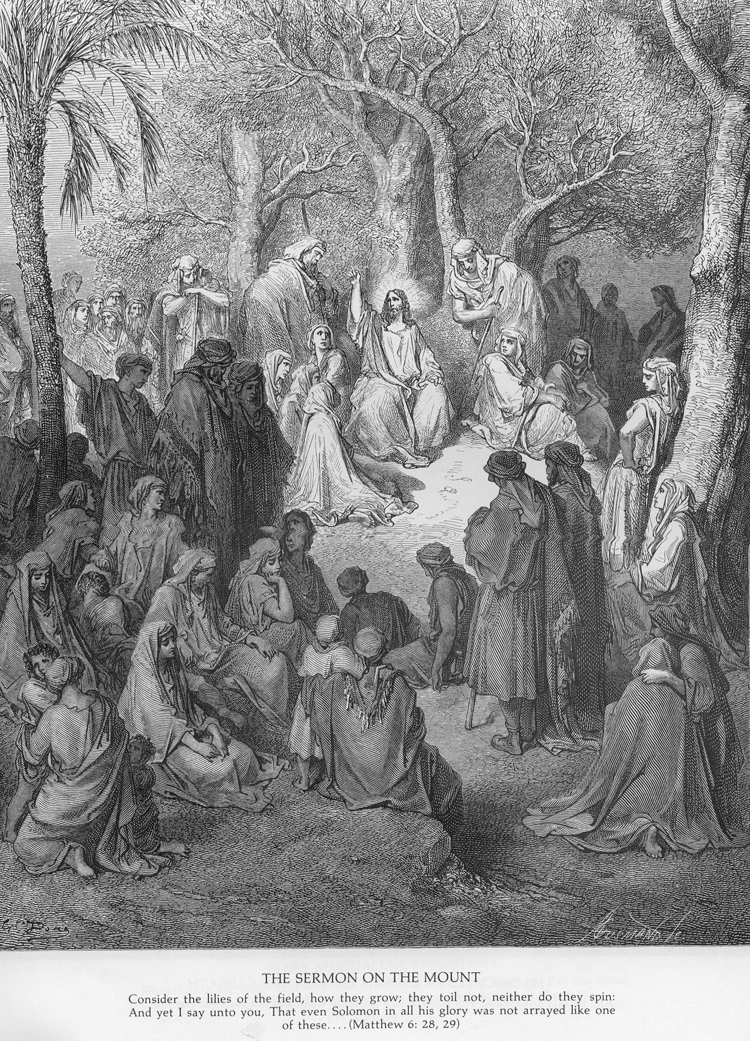
“It is not fitting for a man that God should speak to him except by inspiration, or from behind a veil, or by the sending of a messenger to reveal, with God’s permission, what God wills: for He is the Most High, Most Wise.”
Quran, 42:51Introduction
Reality is metaphysically unified. Things simply are as they are.1
The Real, however, is not encountered bare. It discloses itself symbolically. Each thing, each symbol, both discloses or obfuscates the principles underlying its true nature.
Reality is navigated either vertically (the leap of intuition by which the necessary principle governing a symbol is apprehended) or horizontally (the process of reasoning through the particulars or incidents of a phenomenon at its own register).
Virtue is the clarification of a symbol’s disclosure. Clarity has two dimensions:
- Fidelity: if it is a faithful representation of its source
- Humility: if it does not absolutise itself, confusing itself for its source
The purpose of each symbol is to be maximally virtuous, that is, to clearly and transparently disclose, without distortion or idolatry, the aspect of the Real (the principles) that afford it existence.
Finally, the process by which symbols become maximally virtuous (i.e. enlightened) is determined by the Fourfold Path of Return: Initiation, Opening, Ascent, and Return. This mirrors the Fourfold Path of Emanation from the Real: Intelligibility, Will, Mechanism, and Actuality.
Symbols do not interpret themselves, after all. What is to be done?
How does a symbol begin to retrace one’s steps on the Fourfold Path to the Divine? To what must we attend before noesis arrives? The architecture so far makes enlightenment possible. What makes it practical?
This work will demonstrate that the first stage of return is orientation. Horizontality, correctly exercised, is not contra verticality but is initatic instead.
This is the purification of a symbol within its own register so that ascent becomes not only possible but practicable.
In order to do this, we will define the Pole: these are axial symbols, maximally clarifying manifestations within any given register, and which provide a standard, an exemplar, by which other symbols may be judged, purified, and turned towards their telos, unto the Divine.
This will clarify the nature of Revelation, Prophecy, Sainthood, and Sacred Law.
Creation is a maze of symbols: each symbol must still know where to face in order to find its way Home.
The Axis Mundi
Only the Pure are Invited
Principles are seldom encountered bare at lower registers; while ontologically prior, they remain symbolically inaccessible except through manifestation or through an act of noetic verticality (kashf).
As Reality emanates forth, we note that the lower registers are plural, unstable, obfuscated, and heavily contingent. Further, symbols in any register vary greatly in clarity: some participate more in their governing principles, and others less. Recall the first two stages in the Fourfold Path to the Real:
- Initiation: This is the progressive delimitation and clarification of the self from that which is false, the purgation of noise, purification from shadow. It is the preparation of the self. This is an act of attention, discipline, restraint, symbolic hygiene, and ascetic preparation. It is the insistence against premature closure, the cultivation of receptivity to Divine Disclosure.
- The Opening: The veil thins, possibility widens, the field of the self expands toward the Real. Kashf. The principle discloses itself because the symbol has become sufficiently transparent. If the Initiation is the self preparing for receptivity to disclosure, then the Opening is the Real’s response.
In a line: only the pure are invited.
Now, The Opening is the moment when the opportunity for noetic verticality or the transformation of the symbol on discernment of its telos and the necessary principles that determine it, presents itself. It is the leap from semantics to Reality.2
We will more deeply consider Initiation.
Initiation
Let us take a closer look at Initiation and what it entails. What does it mean to progressively delimit the self, to purge noise, to afford attention and discipline, to self-purify?
Recall that in Only when a Man dies, does he Awake, we define horizontality as the process of reasoning through the particulars or incidents of a phenomenon at its own level of abstraction. Each object consists of a myriad of components, the behaviour and interaction of which clarifies its definition or boundaries i.e. what precisely makes an object what it is. Horizontality is reductive, looks at the world “in terms of its components and mechanism”, and attempts to ascertain its efficient or material causes.
Horizontality works within a register to effect the alignment of an object to its “nature” conceived of at its own register.
But this is precisely what Initiation is! That is, the navigation of a symbol’s inhabited register in order first for a symbol to clarify what it currently is and for it subsequently orient itself to its telos.
That is: the very purpose of Horizontality is Initiatic.
It is to prepare symbols for noetic verticality and the subsequent ascent to and return from the Real.
Note: The additional fact that a conscious being’s telos is to facilitate the alignment of other symbols (including the principle of horizontality itself) implies that there is, in fact, a correct way to invoke horizontality (purifyingly, initiatically).
The Pole
If Initiation necessitates the purification and orientation of a symbol, a “taking account” of what something is, then this orientation requires a stable, exemplary symbol within the register, a standard by which it and all other symbols within its register are evaluated, and which, like the North Star, guides all of them towards states of greater alignment with Being itself.
We define the Pole as the maximally clarifying manifestation of a necessary principle within a lower register. If the principle grounds symbols vertically, then the pole orients symbols horizontally towards the point where verticality is most amenable. The Pole is the symbol of minimal possible false contingency within a given register: all its contingencies are necessary, and the pole simply manifests its essence and little else.
The principle remains the ontological source, and the pole is the primary opening and invitation, the ladder of return. The principle is what makes the register intelligible, the pole is what makes that intelligibility practicable.
If Reality is graded, then poles make the ascent (and subsequent return) practically achievable.
We have specified the need for a Pole. But for a given symbol at a given register, does a Pole always exist?
Notice that a Register of symbols contingent on a specific Principle is not an arbitrary heap of symbols. It is ordered by the extent to which symbols participate faithfully and humbly in their respective principles.3 Participation is not necessarily uniform: different symbols manifest the principle distinctly under different degrees of delimitation, distortion, and stability: that is, they are distinct in their virtue. The symbol in a register of greatest available clarity to its principle is the Pole.4
Importantly, we remark that poles need not be unique. There may well exist multiple symbols of maximal available clarity to principle. (This has to do with the fact that poles, like all symbols, participate in multiple principles at once as a function of the degree of their contingency or specificity.)
There may exist multiple targets for horizontality. There may exist many paths up the Mountain.5
“All Men are equal but for their Virtue.”
The Holy ProphetThe Search
The search for a Pole is horizontal and clarificatory: once it is discovered, sacralised, emulated or instantiated, noetic verticality becomes most readily available. If the purpose of a symbol is to transparently disclose the Divine, and if the pole most greatly facilitates this disclosure, and finally, if horizontality permits us to navigate within a register, then the telos of horizontality is the search for the pole within any given register. This is the nature of its clarification, the basis of its virtue.
It is where the symbol’s layer of Reality is thinnest, and most amenable to transcendence.
A pole is not necessary the way a principle is (for existence itself), but is necessary as the finite, delimited, particular means by which the graded Reality becomes practically navigable and orientable.
Importantly, there is a correspondence between Poles and their Registers. Notice that often the clearest way to come to grips with a set of symbols is to study the fullest examples of it.
In a deep sense, as conscious beings are the stewards of the rest of Creation, the poles are the stewards of their respective register of symbols.
In sum, we have:
- distinguished the pole from principle
- precluded arbitrariness in orientation
- preserved the apophaticism of deep principle
- introduced the primary means by which practice is to be undertaken
- demonstrated the correspondence of a pole to its register
To be clear, this is the primary function of poles: to be clear. This way, it provides the means for Initiation, mediating between principle and symbol.
The Pole disciplines attention, precludes symbols from confusing abstractions or projections with principles, and provides a stable form through which principle may be approached.
Metaphorically, if the principle is the light, the pole is correctly positioned lens, which other symbols at that register are meant to follow as a means by which to achieve their ends i.e. the clarity of the Light’s disclosure.
For examples, consider the principles of:
- Divine Speech (Determination): the necessary principle at the highest level is Determination itself (the second highest register). Ordinary human speech, however, is unstable, hazy, often untrue, egoic, contextual, and confused. Revelation is the pole of all speech, it is not the Divine Speech at the level of Principle (The Lord saith “Be! And it was,”), it is simply Determination at the level of spoken language. Ordinary symbols that ought to be oriented to or imitate Revelation include everything from casual conversation, poetry, doctrine, legislation, formal arguments, myths, and fables.
- Emanation: the high necessary principle is Emanation or the finite disclosure of the Divine. At lower registers, this elicits the principle of Human Perfection, for it is in human life that the various attributes of the Divine are gathered (more on this later). Ordinary human life is virtuous and vicious, confused to varying degrees. Saints here are the poles of Human Nature, the maximally clear manifestation of Human Perfection in physically extant creation. They are Man fully ascended and fully returned.
- Physical Space: the necessary higher principle is Extension or Multiplicity, the necessary lower principle is orientation. This is the means by which space becomes meaningful. Without an “orientation”, sheer physical space is nothing but dispersion and expanse. The Axis Mundi (for Muslims, the Kaaba) exists as the Pole by which space becomes navigable and oriented. It is the preferred point that determines the standard by which we orient ourselves in the rest of physical space.
- Physical Action: this requires both principles of Embodiment, as well as that of Physical Space. What physical act elicits the greatest degree of fidelity to our telos? What is the action around which the rest of conscious life becomes meaningful? If we are to Be, to bear witness, rather than simply ceaselessly Become, then it is the act of submission to the Real. Again, in the Islamic context, it is the Salah, and more particularly, the Prostration. In the Zen context, it is Zazen. For Catholics, it is the Sacrament.
Note: Note that our poles map onto the Sufi notion of qutb, with the caveat that our notion of pole here is vastly more general. We recognise its existence at every level of intelligibility, for every class of symbols. There is not only a platonic ideal, there are additionally ideal manifestations, which ought to be first sought, and next emulated.
Prophecy and Sanctity
The Exoteric and the Esoteric
Let us now examine the pole of Emanation in greater detail. Consciousness, as detailed in Behold! Bear Witness, is special insofar as its telos is “meta” or universal, it is to be a steward for the rest of Creation, i.e. to align all other symbols to their telos.
That is: the purpose of man is to become the Bodhisattva: to maximally elicit the participation of all the rest of Reality in Being itself. This occurs via the Fourfold Path of Initiation, Opening, Ascent, and Return.
We call a Saint (a Wali) a man who has successfully undertaken this whole Path.
The Saint is thus, as described above, a pole. However, let us evaluate what register the Saint is a pole of.
More precisely: what is the symbol that is clarified as a result of the Saint’s enlightenment? Posing the same question from a different angle: what symbols are aligned by the emulation of the Saint?
It is the soul or the essence of a man: the answer to the question, “Who is he really?”
“Then a golden basin containing holy water was brought to me... My heart was torn out and washed with the holy water before it was restored: it was imbued with faith and wisdom.”
the Holy ProphetThe Saint answers the question of individual return: the journey of one man to the Divine. The Saint is the Real clarified in a soul.
But let’s not be parochial here: the human soul (the conscious being), while an esteemed and universal one is but one symbol yearning for Being.
Consider a society as a whole as a symbol.6 It, like every other symbol, also has a manifestation, necessary principles, and hence, a telos to which it seeks alignment.
A community, like all symbols, have:
- physical actuality (territory, individuals, families, material possession)
- mechanism (language, institutions, policies, norms)
- will (memory, myths, culture, character)
- intellect (intelligible principles which afford meaning to its existence)
Communities can, like all symbols, be clear (virtuous) or opaque (vicious). (Jahilliyah is the Islamic notion of communal opacity.)
Societies too, like all symbols, yearn to disclose the Real.
Note: The question of how this must happen is the basis of all Political Philosophy and to which we will turn in subsequent work.
The Prophet is defined here as the Real clarified in a soul for the sake of further clarifying society. The Prophet is not a sociological phenomenon. Society is the low-register field of prophetic operation, not its source. The source is Divine commission, the locus is the Prophetic soul, the goal is communal ascent.
First and foremost, why must a Prophet be the mechanism of this communal purification? Why not another symbol, say, another society, be the enlightened pole to which a society must turn?
The reason is the specific purpose of man which is custodial, namely, to align both itself and other symbols to their telos. This is not true for “societies” as symbols, and what affords a conscious being’s essence privileged status in Creation.
Secondly, a Prophet, therefore, is necessarily a Saint (for they are a maximally clarified soul).
However, what distinguishes Prophets is the fact they arrive with a message specifically tailored to facilitate the clarification of a particular people.
This message is Revelation. Consider the content of all Revelation:
- An exhortation to shed oneself of illusions
- A rectification of attention to the Divine
- A distinct way of life
We see here the gradual expansion in scope from the esoteric purification of the soul exemplified in the Prophet’s nature itself, who the society is to spiritually emulate, to the exoteric initiation of practical life, which the society is to physically submit to.
This is the nature of Revelation. It is the pole of all communicable disclosure by Reality designed to initiate, and subsequently open (up to verticality) a society as a whole.
The Fourfold Path applies to Communities as well. The Initiation is the clarification of error, the twilight of the idols. The Opening is the presence of or access to Revelation. The Ascent is the high-register transformation of the souls of the community. The Return is Ritual Activity, Sacred Law, norms, etiquette, institutions, and civilisation.
An important corollary: for a community to become virtuous, it is insufficient to rectify the norms and institutions before the souls are clarified, and impossible to do that if principles are not articulated, and error is not demonstrated. You cannot mechanism-design your way into the City of God.
The individual soul needs Sanctity. The communal soul needs Prophecy.
Note: An enlightened society is not a society where every soul is enlightened in the same way. Not everybody’s telos is to be Plato or the Buddha. Everybody, however, does have a telos, and it is incumbent upon them to be aligned to it.
Technical Note: Remember that the human soul, being conscious and universal, is a higher register symbol than that of the exoteric aspects of human and communal life. This is what Ibn Arabi means when he says that Sainthood is greater than Prophethood. This is deeply misunderstood. Remember further that all Prophets are also Saints, and hence every Prophet is a Saint (enlightened soul) coupled with a Message (exoteric way of life). Namely: Sainthood (esoteric) is greater (higher register) than Prophethood (exoteric), but Prophets (esoteric and exoteric) are greater (encompass more) than Saints (simply esoteric).
The Seal and Sacred Law
A Saint clarifies the soul, and is the pole for other souls. A Prophet clarifies society, and is therefore the pole for the whole human being in a society (from his soul to his way of life).
We immediately recognise two principal directions to go even further:
- An expansion of the exoteric scope of the Prophet’s Message
- An expansion of the nation to which the Message is addressed
Firstly, consider the way of life that a Revelation delivered via a Prophet affords. What forms can this take at lower registers?
It necessarily includes exhortation and the rectification of ideas but can further take the form of:
- culture, disposition, and ritual (soft)
- policy, law, and etiquette (hard)
We define as Messengers the strongest possible case, one where the Prophet’s corresponding Revelation extends beyond exhortation to encompass all possible facets of exoteric life, both soft and hard.
This is most clearly seen in the context of a Sacred Law that extends to all aspects of life, however mundane.
For examples, consider the Shariah in Islam or the Halakah in Judaism.
“I asked him, ‘O Messenger of God, how many prophets were there?’ The Holy Prophet replied, ‘One hundred and twenty-four thousand.’ I then asked, ‘O Messenger of God, how many of them were Messengers?’ He replied, ‘Three hundred and thirteen: many.’”
Al GhifariAs above, Messengerhood is lower register than Prophethood, but Messengers are greater than Prophets. They serve as poles for a greater range of symbols (those encompassing every aspect of conscious activity).
Now, what happens if we expand the nation to which a Messenger is meant to serve as a pole of? This is best considered in the extremal case of humanity as a whole.
Just as there exists a soul maximally clarified for the sake of any given community (a Prophet), there must also exist a soul maximally clarified for the sake of Humanity as a whole.
We refer to this as the Seal, like the molten wax applied to document the closure or conclusion of a communication.
Conceived such, the Seal is the Universal Man that discloses Reality at every register from his spiritual essence to his active intent to his means and strategy to his daily and mundane subsistence.
The Seal is the representative man whose Message is both maximally universal as well as maximally comprehensive.
Where Saints steward men, or Prophets steward communities, or Messengers steward entire nations, the Seal is meant to steward all mankind.
The critical attribute is universality.
"The human being is the signet stone of the ring, carrying the seal and inscription which the King stamps upon His treasures."
Ibn ArabiSpanning Registers
Consider a symbol fully aligned with its telos, maximally clear and enlightened. This symbol has a register, and concordantly, has necessary principles which it participates in, and higher principles that those participate in, and so on unto the Absolute.
If a symbol is fully transparent, that is, it is faithful and humble, then it, and all the principles upon which it depends are aligned to their appropriate ends.
All the lenses stack up perfectly, and the light of Being shines straight through, smooth and unblemished.
The lower-register a symbol is, therefore, the harder it is to align fully, for more symbols in its chain of emanation must be aligned before it can be.
For a trivial example: this is why it is easier to intend to be righteous than it is to act righteously. Action is of lower register than Intent, and needs more to be in place before it can be rectified.
Another example, it is easier to note that the political order must be just (intelligibility), than it is to inspire justice amongst the population (will). It is even harder to design just policy and institutions (mechanism), and hardest of all to actually implement those policies justly with physical people (actuality).
To wit: for every clear low-register symbol, all high-register symbols upon which it depends must also be clear. It is therefore, harder to fully align a low-register symbol, than a high-register one.
The Character of the Word
Ibn Hisham: “Tell me of the character of the Messenger of God.” Ayesha: “Do you not read the Quran?” Ibn Hisham: “Of course.” Ayesha: “Verily, the Messenger of God was the Quran, and the Quran was him.”
“And the Word became flesh and dwelt among us.”
John 1:14“I am the Way, the Truth, and the Life.”
Christ, John; 14:6“Enough, Vakkali! What is there to see in this vile body? He who sees the Dharma sees me; he who sees me sees the Dharma.”
the BuddhaWe now have an account of the nature of the bearer or the locus of Revelation’s disclosure, that is, the soul of the Prophet.
Formally, the structure of emanation (The Hierarchy of Being) notes that deep, high-register principles like Mercy, and Justice are the ground of intelligibility for Revelation, the Prophet’s essence is the mechanism by which Revelation is afforded the means to instantiation, and the physical words and ideas that comprise Revelation are here the Actuality that are pronounced.
Let us now briefly consider the character of the Divine Word itself as pole of speech and communications.
What is Scripture? What distinguishes it from metaphysical speculation, ethical philosophy, constitutional jurisprudence or romantic poetry?
Apparent and Symbolic
Much is written about what Revelation means.
At the outset, we must assert aggressively that it is an abhorrent psycho-spiritual error to confuse “literal” for “truthful”. (This is to absolutise the lowest-register manifestation of Revelation, and thereby obfuscate its connection to the Real.) Remember that all communication is ultimately representative. The word “apple” is not the apple itself. It simply denotes the apple. Which apple? It may well refer to the apple on the table in front of you, the apple that fell on Newton’s head, Eris’ Apple of Discord, the Forbidden Fruit from the Garden of Eden, the essence of “the apple”, the essence of the “fruit” or even “sustenance” itself. We re-iterate: all contact with Reality, including communication, therefore, is necessarily interpretive.
The literal meaning is simply the lowest register manifestation of a Revelation that, being an enlightened symbol, spans all possible registers. Literalism is simply the lowest, most particular possible interpretation one can afford to a representation. This is guilty of precisely the same flattening and absolutisation we decry in modern secularism.7
This is intensely sinful.
There is a common misconception that the exoteric meaning is “shallow” and that the esoteric meaning is “secret”; this is imprecise.
It is virtuous (clearer) instead to note that the esoteric, principled interpretations of Revelation is simply the higher register manifestation, and that the exoteric interpretations of Revelation are the lowest register manifestations, and that both are simply stages in the polar emanation of the Real into speech. Revelation is the faithful disclosure of the Real at every possible register.
This has important implications: firstly, that we must be neither legalistic, nor antinomian. By being legalistic, we sin by absolutising low-register symbols, and sacrificing principle. By being antinomian, we sin by precluding the emanation of principle into lower-register symbols, leaving them unaligned.
This is why every Saint also maintains reverence for Sacred Law from Augustine to Rumi. Where they didn’t, it is always in the service of higher-register rectification: to preclude legalism or literalism, God forbid, and shock the soul into re-alignment.
A body without a soul is a corpse. A soul without a body is a ghost.
Appendix I: The Character of Prophethood
For a technical and comprehensive overview of the characteristics that define Prophethood consider that Prophets:
- Are sent to a community (Irsaal)
- Bear authoritative disclosure beyond what the community currently has available (Wahy)
- Are responsible for exhortations towards the Truth (Bayaan)
- Provide judgments and criteria for the differentiation of symbolic activity (Hikmah/Furqaan). This is their wrathful, initiatic, horizontal function.
- Serve as an example to emulate (Qutb/Uswah). This is a statement of their Polehood.
If a Prophet further provides a Sacred Law, that is, their message extends to all aspects of exoteric life, then they are a Messenger.
Appendix II: The Polar Search
Despite the Holy Prophet’s statement that there exist 313 Messengers (who will include holy figures throughout history). The Islamic Tradition generally names 5 specific Messengers:
- Noah
- Abraham
- Moses
- Jesus
- Muhammad
The metaphysical category is clear: the identity of the remaining Messengers belongs to revealed history and the discernment of their respective peoples.
What about Seals? Their defining attribute is universality. Two examples of great men with universal messages come to mind at once: Jesus and Muhammad.
The specifically Islamic intuition here is that while Jesus is universal in his ethics, disposition, habits, spirit, exhortation, and culture, his Law and Politics are not comprehensive. Conversely, where Moses’ Law and Politics are comprehensive, his flock is not universal. The Islamic Tradition argues that Muhammad alone comprises total universality along both dimensions. Obviously, whether or not the reader agrees on how to understand specific historical characters has no bearing on the metaphysical realities of Polehood, Sanctity, Prophecy, the Message, and the Seal.
The arguments in this work are not apologetic: the definitions are purely metaphysical.
Appendix III: Ibn Arabi on Revelation
“He who sent it down knows all those senses without exception... Hence, when someone understands a sense from the verse, that sense is intended by God in this verse in the case of the person who finds it. This situation is not found outside God's Speech.”
The Meccan Openings, 2:119“Every sense (wajh) which is supported (ihtimāl) by any verse in God's Speech (kalām)—whether it is the Quran, the Torah, the Psalms, the Gospel, or the Scripture—in the view of anyone who knows that language (lisān) is intended by God in that word (kalima).”
The Meccan Openings, 2:121“The folk of the outward (ahl al-zāhir) see only the body of the word. The folk of the inward (ahl al-bātin) see only its spirit. But the Perfect Knower (al-‘ārif al-kāmil) is the one who looks at the body of the word with the eye of its spirit, and at its spirit with the eye of its body.”
The Meccan Openings, 2:107Notes
- This is Tawhid or Advaita, for those of you paying attention. ↩
- This is distinguished from semantic verticality which is the leap from syntax to semantics instead. If semantic verticality is the process of abstraction and ideation, then noetic verticality is the moment of insight when truthhood is realised. ↩
- Mathematically speaking, a Register is a partially-ordered set. ↩
- This is most easily seen in the cases we’re most concerned with. For finite classes of symbols, all of which are cross-comparable, there trivially must exist maximal elements. Note that this includes the set of human beings, the set of possible physical actions, the set of configurations of atoms in the known Universe, the set of all pieces of information of a given length. The question of the existence of Poles in genuinely infinite sets of symbols (for examples, the set of all communications of arbitrarily long length, or the set of all integers) we defer for now; it will have no bearing to the rest of this work. ↩
- See Schuon’s Transcendental Unity of Religions ↩
- Not the principle of Society, but any given society. ↩
- We do not deny the literal; we simply condemn the solely literal. ↩