Essay
Only when a Man dies, does he Awake
On the Transfiguration of Illusions
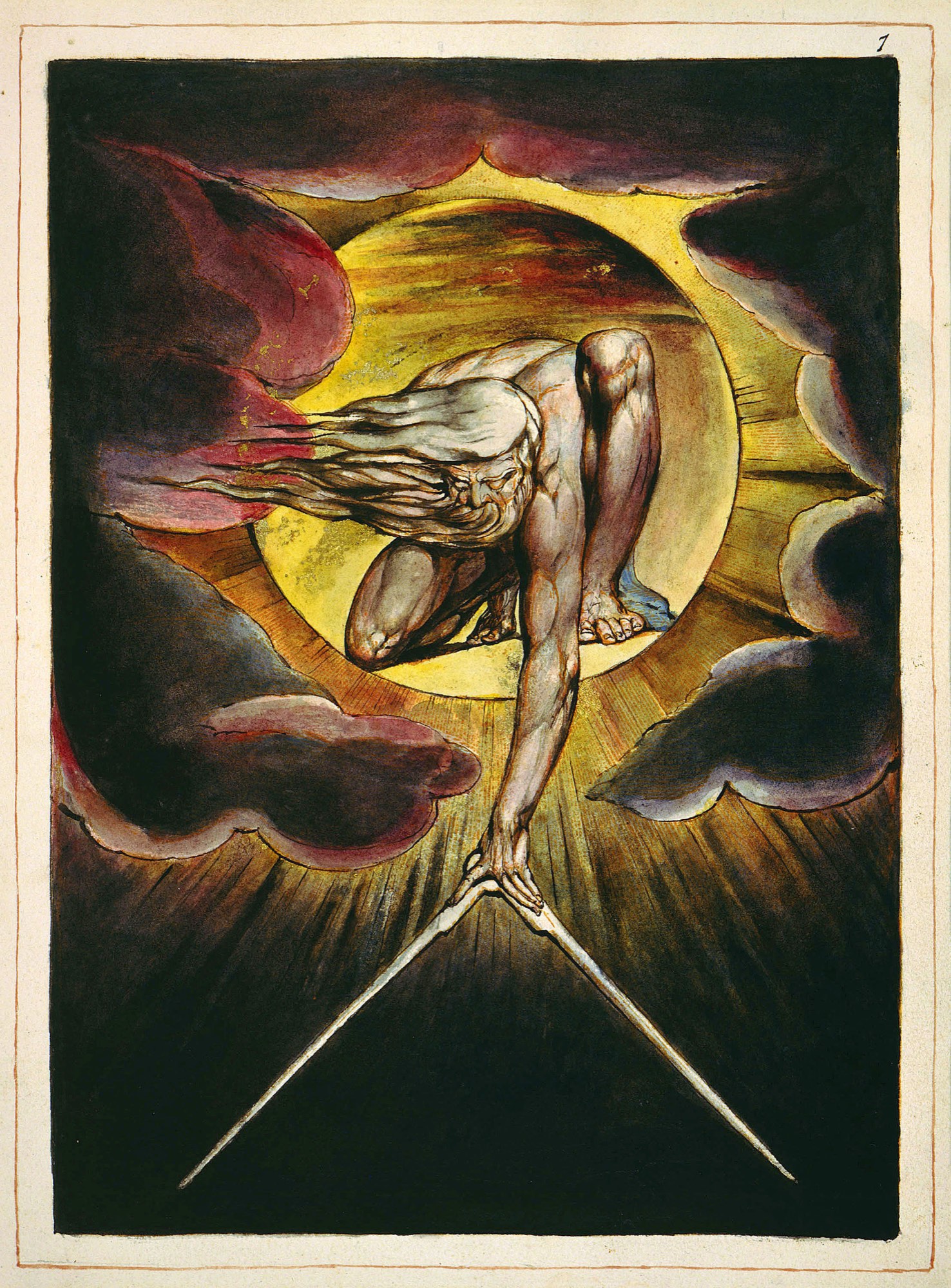
“All men are asleep. Only when they die, do they awake” — Ali Ibn Abi Talib
“The world is an illusion; it has no real existence. And this is what is meant by imagination (khayaal)… you imagine that the world is an autonomous reality independent of the absolute Reality, while in truth, it is nothing of the sort! You yourself are an imagination, and everything that you perceive “to not be you” is also an illusion. Ultimately, the whole world is no more than imagination within imagination. Dreams within dreams.” — Ibn Arabi
“昔者莊周夢為胡蝶,栩栩然胡蝶也,自喻適志與。不知周也。俄然覺,則蘧蘧然周也。不知周之夢為胡蝶與,胡蝶之夢為周與。周與胡蝶,則必有分矣。此之謂物化。(Once, Zhuang Zhou dreamed he was a butterfly. Suddenly he woke up and there he was, Zhuang Zhou. But he didn’t know if he was Zhuang Zhou who had dreamt he was a butterfly, or a butterfly dreaming that he was Zhuang Zhou.)” — Zhuang Zhou
Are Illusions evil?
The words: “dream”, “illusion”, and “imagination” do not (and should not) indicate something false or vain but rather something insufficient. Let’s consider illusions (we identify them with signs or ayahs) some more.
There are 3 components to an illusion:
- The Sign: the representation
- The Source: the object being represented
- The Interpretant: the transformation of the intepreter by virtue of contact with the Source via the sign
Illusions here are simply images in mirrors, reflections of something truly Real. Illusions here ought not to carry much moral valence: they’re certainly not to be dismissed as something necessarily evil. At worst, illusions are only incidentally evil insofar as they obscure or veil their true nature. They are deceptive, contingent, and ontologically derivative. The danger lies not in their existence at all, but in their capacity for misinterpretation.
However, once an illusion’s true nature is apprehended, the veil is lifted, the image is identified with its provenance, its source. The illusion is transformed: not only is the illusion no longer deceptive, it becomes an enduring reminder of its source.
How are we to ascertain the goodness of an Illusion? Quite simply:
- if it is a faithful and genuine representation of an aspect of its source. (Of course, if it were to perfectly represent every aspect of its source, then it would be indistinguishable from the source itself.)
- if it does not absolutise the aspect, i.e. it does not lead one to confuse the source’s aspect for the source itself.
If an illusion is good, then what we feel for that aspect of the source must naturally carry over to the illusion, that is, good illusions remind us more of their sources. Good illusions re-orient salience towards that which is signified, i.e. they don’t simply represent their sources, they “invite participation” in them.1
If you detest or love your physical appearance (an aspect of you that is not all of you), and stand in-front of an unblemished, plain mirror, then you will come to detest your image as well. Conversely, if you love or detest your image in this mirror and it is a faithful representation of you, then it follows that you love or detest your physical appearance as well.
The illusion, notably, is a symbol: a representation of something deeper at a lower level of abstraction2, at a level of lesser reality. After all, your image in the mirror is less real than your physical appearance is.
So, in order to ascertain an illusion’s goodness, we must necessarily also have some grasp of its true nature, i.e. its source, what its representing and which aspect of that source.
And all the World’s a Symbol
Whatever is contingent does not possess being in itself, but receives it under determination and limit, at a certain level of abstraction. A chair is not a table, but it is also not the principle of “chair-ness”. However, in order for it to be a chair, it necessitates first the intelligible principle of “chair-ness”.
Such determination does not render a thing false, but insufficient: it manifests reality under a particular aspect rather than in its fullness. Contingent beings therefore do not exhaust what they disclose; they point beyond themselves to the source upon which they depend, i.e. their principle.
The world is not illusory because it lacks reality, but because it borrows its reality. The world is thus symbolic by its very nature: a graded disclosure of the Absolute through finite forms.3
In sum, things are not illusions because we perceive them to be. We perceive them to be illusions because they are, and they are because their being is contingent, and delimited.
Climbing the Ladder
How do we ascertain an illusion’s nature? How do we go from representation to reality? Illusions are symbols, and symbols are to be interpreted.
Interpretation, thus, is the process by which we climb the ladder of abstraction from things less real to things more real, i.e. away from shadow and towards light, away from manifestation and towards principle, away from contingency and towards necessity.
Importantly, note here that more real means causally fertile, universal, necessary, self-subsisting. An object’s nature, its underlying principle, is therefore more real here than the object itself4. (It’s important to clarify here that an interpreter’s notion of a principle is not the principle itself. The former is an epistemological object and contingent ultimately on the interpreter, the latter is a necessary object that the interpreter is attempting to get at. The impression of an illusion’s source is not more real than the illusion, but it’s source really is more real.)
How does interpretation take place? Here we must introduce notions of:
- Verticality: the leap of intuition by which the necessary principle that underlies or governs a phenomenon is apprehended. Each object consists of a myriad of attributes, some of which are salient in a given context. Verticality involves apprehending the attributes of an object that make it what it is in that context i.e. the answer to the question: “What is it that makes this what it is?”5 Verticality is synthetic, looks at an object “as-it-is”, attempts to ascertain its formal or ultimate causes, i.e. what is its form? what is its purpose?
- Horizontality: the process of reasoning through the particulars or incidents of a phenomenon at its own level of abstraction. Each object consists of a myriad of components, the behaviour and interaction of which clarifies its definition or boundaries i.e. what precisely makes an object what it is. Horizontality is reductive, looks at an object “in terms of its components and mechanism”, and attempts to ascertain its efficient or material causes, i.e. what does it consist of? how does it work and how has it come to be?
To further drive home the dichotomy: verticality here is identified with A’ql, Intellectus, teleology, meaning, right-brained thought, and structuralism whereas horizontality here is identified with Fikr, Ratio, mechanism, utility, left-brained thought, and reductionism.
(Kashf or Revelation, of-course, is the most extreme form of verticality, whereby rather than relying on intuition of any kind, an interpreter is granted immediate insight into the nature of Reality from on-High. We return to this below.)
The analogy here is as follows: if verticality results in our being transported to the realm of higher principles, it is horizontality that clarifies the distinctions, delimitations, and contingencies that distinguish certain objects or principles from each other. Verticality results in us seeing “chair-ness” when we look at a chair. Horizontality distinguishes between this chair and that one or between “armchair-ness” and “churchpew-ness” with reference to the particulars of each object or principle.
Verticality is unificatory and ultimately receptive. Horizontality is multiplicative and ultimately projective.
(This echoes Plotinus’ Procession and Reversion. Verticality is female-coded, appreciative, passive and horizontality is male-coded, determinative, active. Verticality is Mercy and Horizontality is Wrath.)
Interpretation is the interplay of horizontality to first clarify an illusion’s delimitations, the sign as is, and what it relates to, and verticality, to finally determine an illusion’s nature, the sign as meaning, and what its for.
In order to interpret, we must first, therefore:
- Determine or clarify the illusion under consideration (horizontality) This makes clear what the illusion is, and what it is not, i.e. what is the sign?
- Receive intuition about its nature from the illusion’s partial disclosure of reality (verticality). i.e. what is the sign for? why the sign? what is its nature?
“Externally, the branch is the origin of the fruit; intrinsically the branch came into existence for the sake of the fruit. Had there been no hope of the fruit, would the gardener have planted the tree Therefore in reality the tree is borne of the fruit, though it appears to be produced by the tree.” — Rumi
A brief note on Receptivity Zazen, or Zen meditation, requires “unlearning”. But unlearning what? “Zen wants us to see directly into the nature of our own being, and not through the medium of concepts…Zen does not ask us to get rid of thinking, but to cease identifying ourselves with it.” — Dr. T. Suzuki Receptivity here, then involves emptying the ego (for it may well tie you to irrelevant particulars of the illusion at hand), and to allow the ground truth of all Being to “swell forth”, to illumine the subject.
“To be full of things is to be empty of God. To be empty of things is to be full of God.” — Meister Eckhart
The transfiguration of an Illusion
Critically, however, interpretation, or the move from illusion to principle, by itself, is not good by itself.
Critically, it requires re-integration downwards. This is necessarily dialogic and therefore must necessarily result in the transformation of both you (the subject) as well as the illusion, as a result of an encounter with the Source6.
The symbols (including you yourself) are then necessarily transformed by the journey upwards and return renewed, imbued with purpose (telos), and meaning.
What does it mean for this return to take place? It can either occur at the level of the principle underlying the object (i.e. at the level of vertical intelligibility) or at the level of the attributes defining the object (i.e. its attributes at the level of abstraction at which the object exists).
In summary, either an illusion (and therefore ourselves) is made good as a result of a deeper understanding of its source, or as a result of us “physically” clarifying the illusion.
The first is a vertical act of intelligibility, the second, a horizontal act of determination.
Once interpretation takes place, we must either understand (appreciate God’s Plan) or we must act (enforce God’s Plan)7. “All that is to be known must initially ‘presence’ to the right hemisphere (we have no other access); then be transferred to the left hemisphere so as to gain expression through re-presentation; and that re-presentation returned to the right hemisphere where it is either recognised for its consonance with the initial presencing and subsumed into a new Gestalt, or rejected.” — Iain McGilchrist, the Matter with Things
Is Interpretation arbitrary?
A natural objection presents itself here: if the world is symbolic and interpretation is required to ascend from illusion to principle, what constrains interpretation? What prevents this from dissolving into arbitrariness or projection (i.e. subjectivity)?
The answer is fourfold. Interpretation is constrained:
- ontologically: symbols can disclose only what is capable of accounting for their being, not whatever the interpreter happens to impose. (A chair can be seen for its “chair-ness”, not its “table-ness”, for there is none.)
- semiotically: meaning is triadic (sign, source, interpretant), and interpretations that are false fail to transform the interpreter in ways that deepen intelligibility, coherence, and orientation.
- existentially: ascent without return fractures life, and interpretations that cannot be reintegrated into attention, action, and conduct thereby disqualify themselves. Interpretation must result in positive activity (either appreciative or determinative).
- aesthetically: as Scruton notes, “The Truth is hard to pin down, Justice is complicated to enact, but Beauty is immediately graspable.” He’s correct to note that our aesthetic impulses carry with them both moral as well as epistemic (and I’d argue, ontological) implications. Beauty is Truth’s smoking gun, a fact mathematicians have always known: “If I have to choose between beauty and truth, I choose beauty.” — Hermann Weyl
“And what is the truth but beauty, and beauty, truth?” — John Keats
The costs of Confusion
Why ought we to care about an illusion being good? Namely: what are the costs of confusion?
The root of falsity is the misapprehension of an object’s form with its essence, the confusion of a symbol for its principle. (This is the metaphysical essence of the Cardinal Sin of Shirk.)
Since meaning gushes forth from principle, and illusions are good to the extent that they disclose this meaning, it follows that an illusion that is not good obfuscates, mutilates or distorts its underlying principle.
This is the nature of Idolatry. This is the reign of Nihilism. This is the alienation of the Self.
It is no wonder then, that the prevalence of symbolic confusion, the refusal to interpret Reality, the confusion of form for essence has now manifest in everything from the Meaning Crisis, the tyranny of our political forms, the fertility crisis, mass burn-out, and the ugliness of modern life.
We stress, nevertheless, that the material consequences (overwhelming though they are) remain only incidental to the principal malady of alienation from the Truth and Telos, Beauty and Being.
Serenity and Courage
Since God (the One, the Absolute) remains the ultimate Truth from which all the illusions that constitute reality simply borrow their being, to love God subsequently implies loving everything that faithfully reminds one of Him. Once we interpret reality, we are to either:
- Bring to bear on the illusions a mode of attention that more clearly highlights the Names being represented by those illusions
- Act on the illusions that they better represent His Names (aspects)
After all: ”God, grant me the serenity to accept the things I cannot change, the courage to change the things I can, and the wisdom to know the difference.”
(See Appendix II.)
Interpretation’s Final Destination
Reconsider: “all men are asleep; only when they die, do they awake”.
Whatever a man perceives in this present world around him is to him as a dream is to a man who dreams. It must be interpreted (ta’weel).
Here, death is fanaa or mystical self-annihilation, where a man unites with the Divine and “wakes up”. The man recognises that the Divine is all that is Real, the ultimate Ground. This is the final destination of all interpretation, all abstraction, all perception, and ultimately, all illusion.
What happens after this waking up? The man in a state of fanaa opens his eyes, looks around, and what does he see?
He sees the same illusions he once did, but all he perceives is the Divine in a state of self-subsistence (baqaa). Reality is transformed and he inescapably with it.
Post-Script If meaning is triadic, then knowledge is not the mere storage and manipulation of correct descriptions. A sign has not been interpreted until the interpretant has been formed. This is the ground of a higher objectivity: not the evacuation of the subject, but its purification and enlargement, so that the world’s symbols become increasingly transparent to their ultimate Source. In the next essay, we will see what an epistemic standard would look like if it took this seriously.
Appendix I: A brief note on Semiotics
There are 3 components of signification:
- The Sign: the representation
- The Source: the object being represented
- The Interpretant: the transformation of the intepreter by virtue of contact with the Source via the sign
Meaning, therefore, is ultimately triadic. An evocative analogy: the Sign = the Son, the Source = the Father, the Interpretant = the Holy Spirit, i.e. the result of the interpretation of the life of Christ to further see God.
Peirce introduces further technical language to highlight the 3 correlates of signs: the presentative (the sign as it physically is/monadic), the re-presentative (the sign as it relates to the source/dyadic), and the communicative (the sign as it is interpreted to inform our understanding of the object/triadic). For each of the 3 correlates, he further introduces definitions for qualisigns, sinsigns, legisigns (presentative), icons/indices/symbols (representative), rhemes, dicisigns, arguments (communicative).
This is further conjoined with his notion of the 3 universal categories:
- Firstness: quality, existence, possibility, idea, “some-ness”
- Secondness: factuality, resistance, impulse, actuality, material, “this-ness”
- Thirdness: representativity, mediation, continuity, habituality, “all-ness”
Finally, the 3 correlates conjoin with the 3 universal categories to give us 10 kinds of signs. We will discuss this further with respect to Emanation in subsequent writing.
To me, this evokes Ibn Arabi’s distinctions between:
- Firstness: the Divine as al-Haqq (Truth), al-Dhat (Essence), the Mystery of all Mysteries, describable only apophatically, fundamentally unknowable, God as “He” in the Scripture. This is God beyond all Names, God as Essence itself, beyond all Existence/non-Existence.
- Secondness: the Divine as Allah, an agent, active, Infinite and Eternal, maximally Transcendent and inescapably Immanent, God as “I” in the Scripture. This is God as Self-Disclosure, God conscious of Himself, God as Existence.
- Thirdness: the Divine as Rabb (Lord), your Creator and Sustainer, unbounded in Mercy and Wrath, God as “You” in the Scripture. This is God as Conscious of you. God as Command, Judgment, Mercy, and Salvation.
Appendix II: The Wisdom to know the Difference
“Make the best use of what is in your power, and take the rest as it happens.” — Epictetus
“If there’s a remedy when trouble strikes, What reason is there for dejection? And if there is no help for it, What use is there in being glum?” — Shantideva
“At the head of all understanding – is distinguishing between what is and what cannot be, and the consoling of what is not in our power to change.” — Solomon ibn Gabirol
Notes
- This is what Vervaeke calls relevance realisation ↩
- It is important to note here that by “abstraction” here, I do not mean an “impression” or epistemological category that subjects/interpreters glean from apprehending the object, but rather the necessary principle of which the object is simply an instantiation. i.e. it is an ontological rather than epistemological term here. ↩
- The argument, echoing Ibn Arabi, Ibn Sina, Spinoza, or Aquinas is as follows:
- Contingent beings, by definition, do not contain the reason for their existence, they have a cause
- What does not contain the reason for its existence cannot be self-subsistent
- What is not self-subsistent must receive being under limitation
- Limitation entails partial manifestation rather than fullness
- Partial manifestation is symbolic disclosure, not falsity
- It is important here to clarify that named abstractions like “chair-ness” or “wet-ness” do not live in some “infinite metaphysical warehouse” a la naive Platonism, but rather, as in the Akbari/Neoplatonic tradition, the only true independent mind is the Divine. Our intellects (created and contingent as they are) simply participate in the Divine intellect to varying degrees. They are simply effects of the same intelligibility they’re apprehending i.e. they themselves are intelligible principles governed by higher principles. The principles themselves exist simply as meanings (ma’ani) or Names in the Divine Intellect. ↩
- Context is important here since that mediates what attribute of an object is most salient. For instance, a wooden chair freshly thrown in a bonfire is defined by its wood-ness in contrast to a wooden chair on which somebody is sitting for dinner, which is defined by its chair-ness. That the object is made of wood is incidental to the person sitting on it, but necessary for it to be in the bonfire. Similarly, that the object is a chair is incidental to its presence in the bonfire, but necessary for the person sitting on it. ↩
- i.e. Peirce’s interpretant ↩
- Obviously, this enforcement is itself a form of appreciation in the great Cosmic Dance. ↩