Essay
The Hierarchy of Being
In Anything, there is Everything
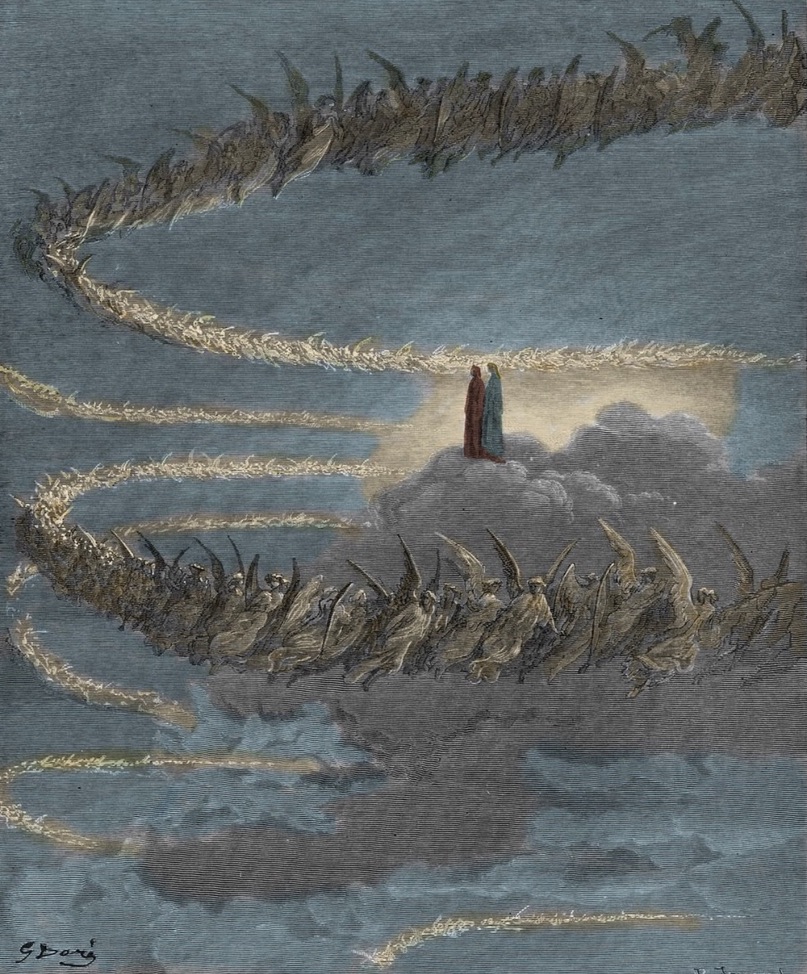
Preamble
The Grammar of Disclosure introduces:
- The principal axes along which to interpret symbols:
- Gender:
- Mercy: does the symbol open possibility?
- Wrath: does the symbol necessitate outcome?
- Clarity:
- Fidelity: does the symbol faithfully represent its source?
- Humility: does the symbol ever claim to be its source?
- Register: the distance of a symbol from the Real, a measure of a symbol’s particularity or contingency
- Gender:
- Virtue is the increase of a symbol’s clarity to higher register principles with an act of mercy or wrath. Vice is the opposite.
- Virtue is thus an orientation of the symbols of Reality to the Divine, towards their telos or ultimate purpose.
Introduction
If the disenchantment of the world is characterised by a flattening of Reality, a positivism that deluded us into believing that “all you see is all there is”, then a re-enchantment of Reality must take it upon itself to clarify Reality’s depth.
This depth is apprehended by interpretation: an act of verticality that allows us to pierce the Veil, to see something not for what it appears to be, but for what it means, what it’s for, what it must be.
It is to subordinate questions of "how” [horizontality] to questions of “why” [verticality] instead. We must know where we are going, before figuring out how to get there. If not: we are simply lost.
If physics is the study of the Real as appearance, symbol, shadow, and material, then metaphysics is the attempt to ascertain the principles that these appearances, symbols, and shadows participate in. What gives them structure, meaning, and purpose.
In short, the Curse of our Age is the death of Metaphysics.
We therefore ask: what happens when undergoing verticality, when apprehending the principles that a symbol (any extant object, ideal or material) participates in?
In order to do this, one must first focus one’s attention not on the object alone, but on the point beyond it: the principle that was necessary for it to exist at all.
Reality is already asymmetrical. Things do not depend on one another equally. Some explain more than they are explained; some things are eternal, while others transient; some things offer meaning while others merely receive it.
Phenomenologically, Attention is already discriminatory. Some things are important, and other things are not. Every act of interpretation already implies a hierarchy.
There is a Hierarchy of Being (ontological), and a hierarchy our attention implies (epistemological).
The fundamental question: is our attention correctly calibrated? Are we prioritising the correct things? Those which are True, Eternal, and Luminous?
The Grammar of Disclosure introduces the notion of Register. This is a symbol’s degree of ontological dependence: how far it stands from the Real by contingency, limitation, and particularity.
“Love” is higher register than “a soft kiss under the moonlight”.
In order to then understand correctly this graded, hierarchical structure of Reality, we must necessarily invoke the idea of Register. It is what characterises a principle or symbol’s place in the Hierarchy that comprises Reality. It is important we do so precisely.
The thesis is simple: Reality emanates hierarchically. Man returns by interpretation. Virtue is the rectification of that emanation and return.
This is a study of Emanation: the descent by which the Divine offers Being to Creation, without being blemished, divided, diminished, or delimited.
Behind the Veil
It is worth taking a moment to sharpen our tools, and solidify our terms.
Echoing Climbing the Ladder, the distinction between an idea (an epistemological concept) from a principle (an ontological concept).
Ideas are what we have, as conscious beings: they are abstractions, forms, and patterns. Principles are ontological necessities, that which must be Real for anything else to be.
Principles are the terrain, and the ideas we have are the map we draw.
Not every abstraction “exists”; nearly all abstractions, after all, are simply projections or patterns we discern imperfectly by apprehending Reality at its most particular. If ideas are us being drawn upward from symbols, then principles are what shine down into those symbols as their necessary conditions. They are ideas from the perspective of the Divine.
There is no Earth without first the Sphere. There is no Sphere without first Space.
Similarly, a kiss participates in Love, like fathers participate in Lordship, sunsets participate in Beauty, and war participates in Wrath.
Given that we have this constellation of principles and their symbols, how do we navigate the terrain? The principal modes of apprehension are:
- Verticality (the Intuitive Leap) The synthetic apprehension of an object’s essential nature and purpose. It is to observe an object as a gestalt, as more than the sum of its parts, all at once; bypassing detail to grasp the underlying principle (Intellectus) that makes a thing what it is. It is unificatory, teleological, and receptive, identifying the ultimate cause of or intent behind something.
- Horizontality (the Analytical Process) The reductive reasoning of an object’s components. It operates at the level of particulars (Ratio) to define boundaries and distinctions. It is multiplicative and projective: it explains how a thing works, and how it differs from others, what patterns identify it: its efficient and material causes.
Verticality has two distinct aspects, as specified in the Shades of Verticality:
- Verticality
- Semantic: the discovery or formation of an interpretation that satisfies our theory of Reality. This is the leap from syntax to semantics.
- Noetic: the deeper ascent, not just the formation of an interpretation or semantics to evaluate the syntax, but even further, the apprehension of Reality with which to evaluate the semantics.
Think of semantic verticality as theory formation in one’s mind, and noetic verticality as theory verification in Reality.
Note that while Semantic Verticality is a largely intellectual process, Noetic Verticality is not simply an intellectual, but also a deeply personal process, one that involves and transforms the subject.
Think of the former as knowing something in your mind, and the latter as knowing something in your soul.
This is the difference between recognising somebody is attractive to you, and falling in love. The latter is no less mental: its vastly more involved. You are implicated by it, transformed by it.
Finally, we stress once again the fundamentally apophatic nature of deep principles. This is the idea that past a point, principles and Reality exceed the limits of language and representation, and that any conceptualisation of Reality is inevitably incomplete, distorting it. See the Parable of the Green Man for more.
The remainder is what forms the basis of the Taijitu. The idea that in what we can conceive of as Mercy, there exists a semblance of Wrath, and in what we conceive of as Death, there exists a semblance of Life.
The Divine is ultimately Transcendent. There is nothing one can say of Him. The Divine is intimately Immanent. Everything one says is of Him.
Coming to Be
Let us take a closer look at Disclosure now.
We note that, in order for the Divine to emanate, for Reality to disclose itself, for a symbol to form, four things must happen:
- Intelligibility/Ground Given the principle, the symbol must be possible. It must be intelligible. This is Mercy, an Opening, applied at the level of the principle. For anything to be, it must first be intelligible; it must be possible. By what principle, does the symbol exist?
- Will/Determination The symbol must be specified. It must be given form, identity. This is Wrath, a Closure, applied at the level of the principle. For it to be this thing, rather than that thing, it must be chosen or determined. What is the symbol’s identity?
- Mechanism/Instrumentality The symbol must be afforded means, mechanisms or patterns. This is Mercy applied at the level of the symbol, its activity, its Becoming. For it to do anything or relate to anything else, it must have a structure, mechanism, pattern, or law. How does the symbol act?
- Material/Actuality The symbol is given substance or matter. This is the particular instance, the specific object that is actualised. It is Wrath applied at the level of the symbol, since its instrumentality or mechanism are particularised. The general pattern or activity finds specific occurrence in a specific symbol. For it to be tangible, to be an object, it must be particular, it must become actual. Tangibility does not mean physicality: a thought or a story is also tangible. Has the symbol manifested?
This is the Fourfold Path of Disclosure.
These stages are necessary since:
- Without a ground, nothing can arise.
- Without determination, nothing has form.
- Without mediation, nothing can act.
- Without actuality, nothing can appear.
The first two characterise verticality, that is, the determination of the principle and its relationship to the symbol. They characterise a symbol’s essence, and its underlying principles.
The latter two characterise horizontality, that is, the determination of the symbol’s relationship to other symbols, including itself. They characterise a symbol’s existence, and its consequent activity.
“Bury your existence in the earth of Obscurity, for whatever sprouts forth, without having first been buried, flowers imperfectly.” — Al Iskandari
Down, then Up
Notice the strong parallel with the Fourfold Path to Enlightenment, which we now see is simply Reality’s disclosure in reverse, that is:
- Actuality ~= Initiation The self begins in concrete distortion and must be purified. It must cognise its particularities, circumscribe its boundaries as a symbol. It must order itself. This is the nature of tazkiyah (purification).
- Mediation/Instrumentality ~= Opening The confines of the self loosen; the self is free to do what it is meant to, namely to align itself and consequently the rest of the Universe towards the Divine.
- Determination/Will ~= Ascent That which is not principled in the self, what we, from below, call the self, is annihilated. Contingency and false dependence on the shackles of your circumstances are shattered. The self is returned to the principle that gave rise to it.
- Possibility/Ground ~= Return The annihilated self does not vanish, it is not materially formless. It subsists materially, instead, as a transparent, clear symbol of the Real: freed from false contingency, and opened to the Ground of all Existence, the Divine, the self that free of all contingency as the locus of Divine Self-Disclosure, free to initiate and open the rest of Creation for alignment to its telos. The Bodhisattva is the salient metaphor here.
Note: As in the fractal structure of Enlightenment (the reversion), there is a corresponding fractal structure to Emanation (the procession). Every virtuous act is a fractal repetition of this structure.
In Anything, there is Everything
"The Universe is Man but larger, and Man is the Universe but smaller. There is nothing in the Divine that cannot be reflected in Man, and nothing in Man, that is not found in the Universe." - Ibn Arabi
The Fourfold Structure encodes not simply a Path, they are also the Registers or the Hierarchy of Being. The Registers can be conceived of:
- Processively: they are the sequence by which a thing comes to be When an object is instantiated, it passes through the emanation described above:
- By Mercy, it becomes possible.
- By Wrath, it is specified as something.
- By Mercy, It receives form, pattern, and attributes.
- By Wrath, it appears as concrete, extant.
- Structurally: they are the underlying architecture of Reality itself Essentially, the ground, the determination, the form, and the actuality are also present hierarchically throughout Reality. A sentence is grounded in its meaning, determined by its intent, formed by its grammar, and actualised as a set of words on a page. Like this one right here.
We can logically deduce the second conception from the first by considering the ultimate case of emanation: all of Creation itself.
Treating all of Creation as a symbol, we recognise that it, too, must contain an Intelligible Ground, a Divine Command, a Mechanism, and Material Actuality.
These are the Four Layers of Reality. We will call these the Canonical Registers.
Recognise that there exists a fractalism within each Register itself: each of the elements (ground, determination, mechanism, matter) of any symbol’s disclosure are themselves symbols, and therefore have their own disclosure, after all.1
This is a highly subtle point: Reality is not only hierarchical; it is fundamentally recursive. This is the true nature of the microcosm.
What appears anywhere appears everywhere.
This corresponds precisely with the self-referential fractal structure of the Procession and Reversion of any specific symbol, since any specific symbol exists at one of the registers/layers of Reality itself.
Every stair is a staircase. This is why in each thing there is Everything.
“To see a world in a grain of sand
And a heaven in a wild flower,
Hold infinity in the palm of your hand
And eternity in an hour.” — William Blake
A Rain of Light
We have a model of Reality, a map. Let us see where it takes us with a few examples.
Since we are finite, we encounter Reality as particular, and contingent, and look up at the Divine, we will return up the layers of Reality, by interpretation, from actuality, to mechanism, determination, and ultimately towards intelligibility.
- Virtue (the most important example; we will return to it later)
- Matter: holding the door open for an elderly lady
- Mechanism: the rule, norm, discipline, or habit
- Determination: the intent to instantiate a virtue, to “do good”
- Intelligibility: clarity to telos, the Divine Name disclosed
- Life
- Matter: a pink jellyfish in the North Atlantic
- Mechanism: metabolism, growth, adaptation, and reproduction
- Determination: natural selection, heredity, the environment
- Intelligibility: the principle of life itself2
- Economics
- Matter: the purchase of a loaf of sourdough bread
- Mechanism: the market or resource allocation mechanism
- Determination: constrained resource allocation
- Intelligibility: oikonomia, social value
- Music
- Matter: Bach’s Toccata and Fugue in D Minor
- Mechanism: scale, instrument, notation, acoustics
- Determination: the composition, melody, harmony, and rhythm
- Intelligibility: the principle of beauty, harmony, passion
- Politics
- Matter: the United Kingdom and its citizens
- Mechanism: institutions, procedures, and norms.
- Determination: sovereignty, authority, order, government.
- Intelligibility: the principles of Justice, Order, and the Common Good.
These hierarchies are maintained in the ontological sense, not as a description of current state of affairs.
If the market does not generate social value, or if the jellyfish cannot metabolise, or if the United Kingdom’s institutions do not participate in Justice, then we see vice: the obfuscation of a symbol’s relationship to its telos and underlying principle.
Note: The notion of the minimal sufficient register now itself becomes clearer. A polity, such as the United Kingdom will not be clarified to its principles by recourse to virtuous activity at the level of its citizens or at the level of any individual citizen; the misalignment is deeper, it must take place at the level of Mechanism or Determination.
If the issue turns out to be at the level of Determination, the country’s very notion of sovereignty and authority, then no institutional design will salvage it; these will simply be too low register. A spiritual intervention will be needed. In the context of the modern United Kingdom, think of Cromwell.
No Height without Hierarchy
This is hardly the first presentation in history of a layered, graded Reality. Here are a few others.
The purpose here is not to collapse all these traditions into crude identity but to clarify that whenever man takes Reality seriously, he encounters gradations through which intelligible objects depend on each other ontologically, Creation descends from the Divine, and Man ascends to the Divine.
At the level of deep principle, I do believe we’re attempting to talk (but apophatically cannot) about precisely the same Reality.
- Aristotle’s 4 Causes In his Physics, Aristotle notes 4 kinds of causes:
- Material: “That out of which a thing comes to be; the bronze of a statue”
- Efficient: “The primary source of a thing’s change or quietude”
- Formal: “The form or archetype, the statement of essence, genera, definition”
- Ultimate: ‘That for the sake of which a thing is done.”
- Ibn Arabi’s Hadharat (Presences of the Divine) In his Gems of Wisdom, Ibn Arabi clarifies 5 distinct levels to the Divine:
- Hahut (the Essence): The Absolute, the Divine Essence, the “No-Thingness”. This is beyond all conceptualisation.
- Lahut (the Unity): The Divine is here conceptualisably manifest as principles of pure Mercy, Love, Sustenance, Majesty, Wrath, Power. Definition is afforded to Being.
- Jabarut (the Archetypes): These are the spiritual archetypes, the realm of activity, organisation, and feasibility. and inter-relationships between symbols. The Laws of Physics, the relationship between Supply and Demand, the Hero’s Journey are here.
- Malakut (the Ideal): This is the realm of imagination, idea, apprehension, syntax, shape, and language. The story of King Arthur, a written law, a piece of music or a conversation are here.
- Nasut (the Material): This is the physical, material Universe. Not the conversation, but the actually spoken words, the sounds of the Toccata, the physical obeisance of a law.
- Plotinus’ Great Chain In the Enneads, Plotinus also specifies 4 layers to Reality, the emanatio occurs through the Proodus (Procession):
- To Hen (The One): The Source of all Being, absolutely simple (haplous). It is epekeina tes ousias, beyond all Being, fundamentally undelimited.
- Nous (The Intellect): As light emanates from the One, it turns back to consider its source (theoria), contingent upon it, but also distinct. This is the locus of determination, where the simplicity of the One gives rise to the multiplicity of principles.
- Psyche Pantos (The Soul): This is the layer at which the principles enunciated in the Nous are animated, translated into time and space.
- Physis (The World): Here, the principles accrue density, particularity, concreteness, steresis. Unlike the higher registers, matter (hyle) is non-being (me-on), with no existence independent of the higher registers.
- The Vedic Strata In the Manusmriti and Purusha Sukta, the macrocosm (Creation) is referenced by the microcosm (Man). Reality is the sacrifice of the Purusha (the Primordial Man) whose body is dismembered to become the registers of Reality:
- Brahman (The Absolute): The undifferentiated, non-dual (advaita) Source of all Being. This is not an object, but the Ground by which any object may exist at all.
- Dharma (The Law): The determination of the essence, duty, and rightness by which a thing is and what it is for. This affords each thing its essence (Svadharma).
- Gunas (The Attributes): There are 3 principal attributes: Sattva (Clarity/Luminosity), Rajas (Activity/Passion), and Tamas (Inertia/Density) which comprise the essence of each object, and interplay of which determine its activity, temperament, and pattern of becoming.
- Varna (The Society): Society exists here as the locus of the manifestation of objects at higher registers.
Note: In the presentation above, notice four distinct domains in which the Registers manifest: logically in Aristotle, theophanically in Ibn Arabī, cosmologically in Plotinus, and sociologically in the Vedas. This can be extended ad infinitum: you are invited to try.
“Cut away all that is excessive, straighten all that is crooked.” — Plotinus
The Birth of Tragedy
“And so the value of every mystery is destroyed, popular belief itself is desecrated…and so the chaos is back again, but not the first, fertile, birthing one, but a dying one, decadent, from which the spirit of God could scarcely create a world worthy of Him once more.” — Goethe, Geistesepochen
The Canonical Registers (Intelligibility, Determination, Mechanism, and Matter) have not just ontological significance, but normative significance, too.
A principled, faithful description is prescriptive3. This is the nature of Clarity. There is no "ought" from "is", for all "is" already has within it the seed of "ought".
We will consider this in the context of our current, disenchanted Age.
The premise is that, as History unfolds, symbols become absolutised, thicken, and eventually disclose less and less of their principles first, and finally, less of their Source, the Divine. This is the root of all sin.
As time passes, symbols inevitably untether from principle, analogous to the Second Law of Thermodynamics (global entropy is constantly increasing). Here, instead of entropy, it is particularity, contingency and ontological dependence.
The Canonical Registers demonstrate to us the mechanism. (As for why this degradation is metaphysically necessary, we will discuss this later: beyond the scope of this work.)
Creation degrades in accordance with the Register most attended to, where interventions are aimed, and which Register is most active.
Broad decline is first and foremost a question of Register Inversion:
- Matter supersedes Form
- Means supersede Ends
- Mechanism supersedes Meaning
- Commerce supersedes Law
- Appetites supersede Temperance
- Data supersedes Wisdom
- Limerence supersedes Love
- Procedure supersedes Justice
- Quantity supersedes Quality
- Instrumentality (How?) supercedes Finality (Why?)
The symbol mistakes itself for the Source. We take the Map for the Territory. We stare at the Finger and forget the Moon.
This is what Guenon and Evola mean when they discuss the Reign of Quantity or the Kali Yuga, the chaotic terminus of a path initiated first in the usurpation of Spiritual Authority by Temporal Power.
Hierarchy is not only real. When justly ordered, it is good.
Appendix: Amor Fati et Voluntas
As an auxiliary exercise, let us unpack the tension between Free Will and Fate.
This apparent tension is an illusion, a result of a misunderstanding of Register. Free Will manifests at a register far lower than Fate does.
Islamic Qadr, Christian Providence, and Hellenistic Necessity are all representations of the entirety of the intelligible order within which any act has any meaning at all. This occurs at the level of Being, where free will occurs at the level of Becoming.
Free Will is what things look like from our point of view looking up. Fate is what things look like from Being’s point of view looking down.
Freedom is neither indeterminacy, nor the denial of Fate. It is the creature’s participation in Fate from within Becoming. It is lucid consent to the Logos. This is the nature of Submission (Islam).
Free Will and Fate are in tension only when conceived of flatly in the same plane. Freedom is real at the register of mechanism, and determination. Fate is real at the register of the logos or the intelligible order of affairs.
More explicitly:
- Matter: I type this sentence.
- Mechanism: My psychology, body, and keyboard, but also my incentives to specify this analysis.
- Determination: My intent, and value that gave rise to those incentives. My choice to undertake this analysis in the name of clarity. This is where I am free.
- Intelligibility: It was simply in my nature to do so. Even more deeply, it is simply the Will of the Divine that ultimately rendered me here, able, and concerned with the question enough to attend to it.
“Intent cannot pierce the walls of Decree.” — Al Iskandari
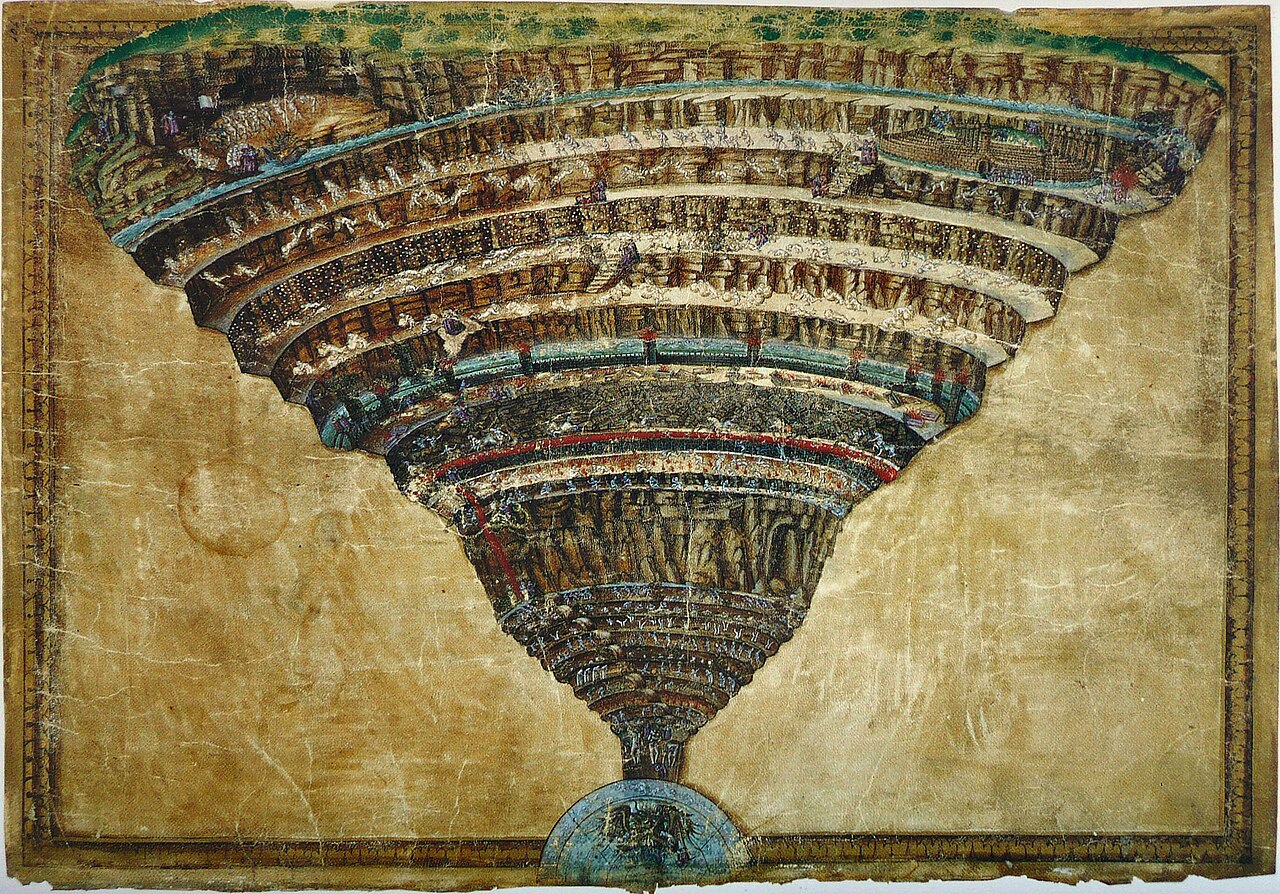
Notes
- Formally: Premise: Every disclosed thing is a symbol, and every symbol requires the Fourfold Structure (Ground, Determination, Mediation, Actuality) to disclose at all. This is given. Now consider any one stage, say the Ground. The Ground is not nothing; it is something, namely an intelligible possibility. It has been disclosed as Ground. Therefore the Ground is itself a symbol. By the universality of the Fourfold, the Ground must itself possess a ground, a determination, a mediation, and an actuality. The same holds for Determination, Mediation, and Actuality. The recursion does not terminate at any finite depth, because terminating would require a stage that is disclosed without being a symbol, which contradicts the universality of the Fourfold Structure. It terminates only at the Absolute, which transcends registration and is therefore not a symbol at all. Therefore fractality is necessary. It is the unique structure compatible with (i) the universality of the Fourfold and (ii) the apophatic singularity of the Absolute as the only non-symbol. ↩
- Potential definition: self-organising, reproductive, closed, low-entropy, purposive systems. ↩
- This is what it means to clarify a symbol with reference to its telos. ↩