Essay
The Grammar of Disclosure
An emanative account of Virtue and Vice
Preamble
You can skip this section if you want to dive straight in.
Only when a Man dies, does he Awake outlines:
- the ultimately symbolic nature of Reality, a nature that mandates interpretation
- criteria for what constitute good symbols
- verticality and horizontality
Philosophy is the poor man’s Poetry discusses:
- Lower objectivity and higher objectivity
- This improper use of language is the fallacy of misplaced concreteness
- Myth, therefore, is the purest form of history
In From Semantics to Reality, I further specify that;
- There are mathematical limits to horizontality
- It is easy to be led astray even thinking vertically
- There is no total description of Reality
- There are two forms of verticality:
- Semantic: which is epistemological
- Noetic: which is ontological, world-anchored, and invokes higher knowing
The preceding essays, therefore, concern Metaphysics (what is the Real?) and Epistemology (how can we know the Real?).
We discuss in Not Objectivity but Annihilation, that wisdom necessitates the transformation of the subject.
This begs the question: what does it mean to transform correctly? What separates good transformation from evil? What even is good and evil?
In order to understand this, we need to further understand the nature of emanation, and the process of Divine self-disclosure. This is the purpose of the following essay.
Here we outline the dimensions along which Reality is made intelligible, and then to barely begin the migration from is to ought.
The Axes of Disclosure
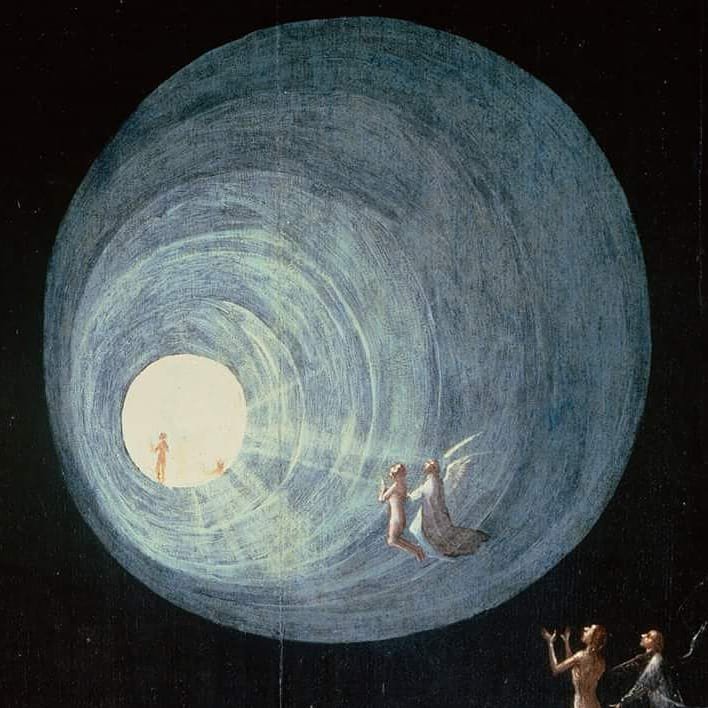
"The Beloved is all and the lover but a veil; the Beloved is living and the lover a dead thing." — Rumi, Masnavi
Rumi opens the Masnavi with a reed-flute crying from separation. The reed is cut from its bed: this severance is both its wound and its form. It cannot return, but it can sound.
Every note it produces is a faithful disclosure of what it has lost and cannot name, and precisely because it cannot name it, the music reaches further than any description could.
The symbol does not merely point at its source. It grieves toward it. This is what it means for a symbol to be simultaneously faithful and humble: faithful because the song is sincere, humble because the song never forgets its home, the reed-bed.
The world does not hide the Real. It is simply what the Real looks like from here.
Reality discloses itself fundamentally through mediation: no finite intellect grasps the Absolute directly, but only via the forms, signs, and correspondences that both reveal and veil Him.
What, however, are the characteristics of the symbols that constitute the vast constellation of Reality?
Gender
“His command, when He intends a thing, is only that He says to it, ‘Be,’ and it is.” — Quran, 36:82
What happens at the moment of a symbol’s instantiation, its origin? For a symbol to be instantiated, two things must first happen:
- An Opening: the symbol must first be possible: the symbol must first enter the realm of possibility, a set of necessary principles for its existence must be available.
- A Closing: the symbol must then be defined: the set of necessary principles from among those available must be affixed, so as to uniquely define a symbol’s particular existence, and then intended.
The first determines a symbol’s essence (Mahiyah) or its quiddity. It is the answer to the question: what is it?
The second determines a symbol’s existence (Wujud), its definition. It is the answer to the question: is it?
The first determines the realm of possibilities, it is an opening of Reality. It is pure receptivity. It is the establishment of a plane of existence for a symbol. It is the Nous, the field of intelligibility.
The second delimits that realm of possibilities to the symbol in question, it is a closing of Reality. It is pure activity. It is the establishment of a symbol’s boundaries within the broader tapestry of Existence itself. It is the Logos, the principle of articulability.
Mercy affords form as possibility. Wrath imposes form as actuality.
In order for a symbol to be manifest, we must first have the Tablet (al Lawh) and then the Pen (al Kalam), which draws upon it.1
Consider natural selection. There must first exist possibility and variation in an organism’s phenotype across the population, before selection pressures apply on it, delimiting and imposing a form on the organism as a whole. The very process underpinning all life is a symbol for the origination of all extant Creation itself. Biological life is manifest simply as a fractal sub-stratum of the broader schema of all existence.
Nothing at all could exist apart from the Real (Existence) itself in the absence of such an opening and closing. It is the source, therefore, of all multiplicity in Reality.
One must first become two, before two can become many.
However, since the process of opening and closing needed to originate a symbol at all invokes further necessary principles (symbols themselves) that determine its opening and its closing, it is clear that those principles, “parent” symbols contribute either to Reality’s opening (its possibility) or to Reality’s closing (its delimitation).
The parent symbols are gendered.
In order for multiplicity to emerge at all from the Real, from the Absolute, we discern the ultimate principles of:
- Opening itself. This is Mercy.
- Closing itself. This is Wrath.
A symbol is therefore deemed Merciful if it widens the field of possibility for the manifestation of other symbols, if it offers itself up as a Tablet on which new symbols can be drawn.
A symbol is deemed Wrathful if it narrows the field of possibility for forms that other symbols can take, it imposes itself as the Pen upon the Tablet to determine the particularities that new symbols can adopt.
In the context of natural selection, then, birth and mutation are fundamentally Merciful, for they permit new forms to emerge, while survival pressure is fundamentally Wrathful, for it privileges only certain forms to survive.
In the context of free economies, commercial innovation is Merciful, for it permits new products, practices, and strategies to manifest, while commercial competition and consumer taste are Wrathful, for they constrain which commercial forms are viable.
Divergent thought is Merciful, whereas Convergent thought is Wrathful.
Forgiving a criminal is Merciful, since it permits the possibility of rehabilitation, but sentencing a criminal is Wrathful, since it precludes the possibility of further activity.
The Quranic command “Be, and it is” names this closing movement precisely: the Divine Speech as pure delimitation, imposing form upon the field of possibility within Creation.
Finally, it is not for nothing that the fundamental dichotomy in all Reality is that of Mercy and Wrath. The former is feminine, while the latter is masculine.2
The Womb is the Tablet, the field of possibility for all new life, undetermined and sheer potentiality. It is only with the introduction of the Pen, that the field of possibility is constrained, given form and particularity.
Mercy as pure opening without delimitation collapses into indifference: no selection, no form, no truth-conditions, no life, no information. Simply noise and chaos.
Wrath as pure delimitation without opening collapses into dead closure: no growth, no repentance, no intelligibility-expansion, no return. Simply stillness and suffocation.
Ultimately, without Mercy, nothing at all would be possible.Without Wrath, nothing at all would be determined.
“Chesed (Mercy) without gevurah (Wrath) is chaos; gevurah (Wrath) without chesed (Mercy) is destruction.” — Zohar, III:142a
“My Mercy encompasses all things.” — Quran, 7:156
“Says God, ‘Indeed, My Mercy prevails over My Wrath.’” — the Holy Prophet
Clarity
We outlined in Only when a Man dies, does he Awake, a symbol’s goodness:
- if it is a faithful and genuine representation of an aspect of its source. (Of course, if it were to perfectly represent every aspect of its source, then it would be indistinguishable from the source itself.). This is fidelity.
- if it does not absolutise the aspect, i.e. it does not lead one to confuse the source’s aspect for the source itself. This is Humility.
We are now in a place to more aptly describe this as a symbol’s clarity.
The Finger must point to the Moon, but never confuse you for the Moon. The Map is not the Territory.
Clarity is secondary to Gender since it emerges at the intersection of gender’s activity:
- Mercy clarifies by revealing the scope of what is possible, yet obscures by refusing to privilege any form
- Wrath clarifies by defining boundaries and bestowing particularity, yet obscures by foreclosing unrealized potential.
A symbol achieves maximal clarity when its opening is sufficiently generous to manifest its essence, and its closing sufficiently precise to distinguish it from what it is not: dissolving the symbol neither into pure possibility nor into over-determination (a form of symbolic absolutisation).
It should therefore become clear that the purpose of apophaticism is precisely to cultivate, protect, and participate in the principle of clarity: to preclude the absolutisation of concepts, and therefore the confusion of epistemology with ontology.
The very Kalimah itself is a commitment to Clarity.
“The name is the guest of reality.” — Zhuangzi, Chapter 1
“The Dao is hidden and without name. The Dao alone nourishes and brings everything to fulfillment.” — Dao De Jing, 41
Register
“Abstraction is the art of ignoring the irrelevant.”
The term “symbol” has here been used in incredible generality to denote all extant things that are not identifiably the Absolute itself.
This is defined as its distance from the Absolute: more formally seen as the measure of principles that a symbol is contingent on. The more contingent (and therefore particular) a symbol is, the further it is from the Divine, and the more necessary or fundamental a symbol is, the closer it is to the Divine.
The more numinous, eternal, necessary and principled a symbol is, the higher its register. The more corporeal, transient, contingent, and manifest a symbol is, the lower its register. Love is a higher register than a kiss.
We define a symbol’s register or its caste as this distance. Reality is graded and a symbol’s register is its grade.
This is intuitively thought of as the extent of a symbol’s abstraction (we must be careful not to confuse what is (ontology) for what seems (epistemology) ).
For instance, a hammer is contingent upon metal-ness, wood-ness, tool-ness, and the principle of leverage itself: each (ontological) abstraction inhabiting a higher register than the particular hammer before you. The hammer will rust and rot; leverage endures.
Register is therefore the degree of conditional necessity a symbol bears: how much of what exists depends upon it, how close it stands to the Absolute's own unconditioned necessity.
Register is not conceptual generality, but ontological dependence. A thing stands higher not because it is vaguer or more general, but because more depends upon it than it depends upon. (See here for more.) A contingent being does not contain the ground of its own existence, it is dependent. Dependency, by nature, is asymmetric, irreflexive. Dependency then defines a partial-ordering on Reality.
A special case to bear in mind is The Absolute itself. It is, after all, not a symbol, it is the ultimate Source and since even the principle of register is contingent on the Absolute, it transcends registration itself.
The principles of Mercy and Wrath, the sources of all extant multiplicity in Reality, therefore occupy the highest register. Particular material things, on the other hand, inhabit the lowest register, and every other symbol lives somewhere on the spectrum.
Note here that the notion of register is intimately connected to the notion of invariance (and therefore permanence and eternality). The more particular a symbol, the more transient it is, the smaller the perturbation needed to alter its essence (or nature). The more necessary a symbol, the more eternal it is, the greater the intervention needed to alter its nature.3
There’s additionally a deep connection between a symbol’s register and gender itself, which ought to clarify the emergence of register in the broad scheme of Reality.
A symbol’s register (caste) comes from the extent to which Mercy or Wrath have acted on the symbol. Principles inhabit a higher register than physical objects, but are also less delimited, less tightly-defined, and exhibit more possibility than physical objects. The activity of Wrath on a principle is what particularises it, and lowers its register.
Importantly, since a symbol’s register is contingent on the activity of Mercy or Wrath, we recognise that gender in Reality precedes register in Reality.
From One comes Two, and only from Two can come Many.
Important Note
These axes are not isomorphic. Gender is ontologically prior: Mercy as the Nous holds all possibilities in inexhaustible availability; Wrath is the principle by which a particular possibility receives its conditional necessity, its existence. Possibility is prior to necessity in precisely this sense: whatever is necessitated must first be possible, but not vice versa. Register is both its consequence and its remainder: the measure of how far multiplicity has descended.
Clarity is the normative criterion: the measure of how faithfully that descent points back to its source.
The Echoes of a Principle
“In my beginning is my end.” — T.S. Eliot
Reality is metaphysically unified. It is One. It is Unique.
The ideas here, therefore, are not new. In fact, they are not even old. I will say, like Evola, that they simply are. Principle, like the Absolute Himself, is beyond all Time: stable, immutable and eternal.
When we lie on the grass, on a Midsummer’s Eve, and look up at the starry sky, we are looking at the same face of the same moon that the T-Rex did 68 million years ago.
The moon, of course, is not even particularly eternal: it is the shadow of a collision, destined for Time’s erosion.
It’s only natural then, that principles vastly more eternal than the moon were gazed upon and discerned in much the same way across the history of human contemplation.
- Frithjof Schuon termed this the transcendent unity of religions: beneath the diversity of forms lies a single metaphysical truth, refracted through the prism of culture and revelation.
- René Guénon spoke of the primordial tradition, a doctrine so fundamental it precedes all historical religions, manifest in each yet identical to none.
- Julius Evola recognized this pattern as the mark of Tradition itself: not mere custom, but the vertical transmission of eternal principles across civilizations that had no contact with one another.
For instance, for gender, any generative system at all structurally requires two processes:
- One that generates possibility or variation
- One that selects or stabilises among those possibilities
Therefore, this is not cultural diffusion of contingent facts but the metaphorisation of Reality’s structure as a result of noesis.
The principles of possibility and determination, emanation and gradation, clarity and obfuscation: these are not “invented” but discovered in Being itself.
Let us briefly see how these Principles have echoed through Time and Space.
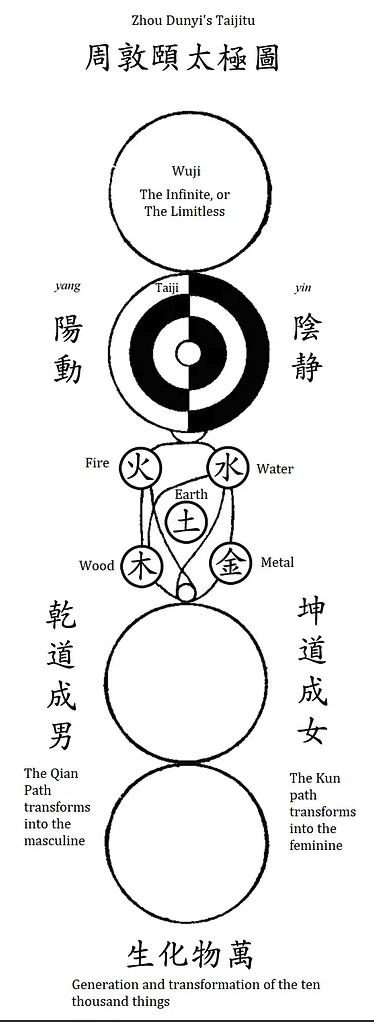
1. Daoism: the Yin, the Yang, and the Ten Thousand Things
On Gender
“Know the male, yet keep to the female” — Dao De Jing, 28
“The Dao gives birth to One. One gives birth to Two. Two gives birth to Three. Three gives birth to the ten thousand things.” — Dao De Jing, 42
Yin is receptive, yielding, fertile, dark: the field of possibility, the valley that receives all streams. Yang is active, delimiting, luminous, assertive: the principle of determination, the mountain that imposes.
“The softest thing in the universe overcomes the hardest thing in the universe.” — Dao De Jing, 43 [Mercy prevails over Wrath.]
“When the masculine (yang) and feminine (yin) unite, all things achieve harmony.” — Zhuangzi, Chapter 6
On Clarity
“The Dao that can be told is not the eternal Dao. The name that can be named is not the eternal name.” — Dao De Jing, 1
“We look at it and do not see it; its name is The Invisible. We listen to it and do not hear it; its name is The Inaudible. We touch it and do not find it; its name is The Subtle.” — Dao De Jing, 14
“Those who know do not speak. Those who speak do not know.” — Dao De Jing, 56
“The fish trap exists because of the fish; once you’ve gotten the fish, you can forget the trap.” — Zhuangzi, Chapter 26
“When the finger points at the moon, the fool looks at the finger.” — Zhuangzi
On Register
“Man follows Earth. Earth follows Heaven. Heaven follows the Dao. The Dao follows what is natural.” — Dao De Jing, 25
Reality is fundamentally graded: from the Dao (utterly simple, prior to all distinction) descends a hierarchy of increasing particularity. The more particular a thing, the more transient, the less real; the more universal, the more eternal. Return is the path from multiplicity back to unity.
2. Hinduism: Prakriti and Purusha, Sattva and Rajas
On Gender
Prakṛiti is primal matter as undifferentiated potency, and and Puruṣha is pure consciousness that bestows definition.
“Prakṛti is said to be the cause of cause, effect, and agency, while Puruṣa is said to be the cause in the experience of pleasure and pain.” — Bhagavad Gītā, 13.20
“I am the womb; the seed-giving Father am I.” — Bhagavad Gītā, 14.4
“Into my prakṛti I place all beings; at the beginning of an age I send them forth again.” — Bhagavad Gītā, 9.7-8
“From Śiva comes consciousness; from Śakti comes manifestation. Śiva without Śakti is a corpse.” — Śiva Sūtras
“The Supreme Person has two forms: masculine and feminine. The masculine is consciousness alone; the feminine is power.” — Tripurā Rahasya, Chapter 17
On Clarity
“That thou art.” (Tat tvam asi) — Chāndogya Upaniṣad, 6.8.7
All manifest things are symbols, reflections of the One in the mirror of multiplicity. Māyā is not falsehood, but the mechanism by which the One appears as many.
“Through Māyā is this universe manifested, through Māyā is it maintained, and unto Māyā does it return.” — Śvetāśvatara Upaniṣad, 4.10
“Just as one might mistake a rope for a snake in dim light, so does ignorance cause one to mistake the world for ultimate reality.” — Śaṅkara, Vivekacūḍāmaṇi, 110
“The Self is one. Unmoving, it moves faster than the mind. The senses lag, but it runs ahead. Remaining still, it outstrips all pursuit.” — Īśa Upaniṣad, 4
“Brahman is real, it is the world that is illusory, the individual soul is nothing but Brahman.” — Śaṅkara’s mahāvākya
“Names and forms are the limitations; the reality is one without a second.” — Bṛhadāraṇyaka Upaniṣad, 1.4.7
On Register
“From the unmanifest, all the manifest streams forth at the coming of day. At the coming of night, all dissolves into that alone which is called the unmanifest.” — The Gītā, 8.18
Shankara describes reality (vivarta) from Brahman (unconditioned) through Īśvara (the Personal God) down to gross matter.
“That which is nearest the Real is most subtle; that which is farthest is most gross.” — Śaṅkara, Brahma Sūtra Bhāṣya, 1.1.2
“From Brahman comes space; from space, air; from air, fire; from fire, water; from water, earth.” — Taittirīya Upaniṣad, 2.1
The Bhagavad Gītā speaks of three guṇas weaving through manifest existence:
- sattva (clarity, elevation)
- rajas (activity, delimitation)
- tamas (inertia, particularity)
“Sattva is pure, illuminating, and free from evil; it binds by attachment to happiness and knowledge. Rajas is of the nature of passion; it binds by attachment to action. Tamas, born of ignorance, binds by delusion, sleep, and passivity.” — Bhagavad Gītā, 14.6-8
“The wise see the same Self in a Brahmin endowed with learning and humility, in a cow, in an elephant, in a dog, and in an outcaste.” — Bhagavad Gītā, 5.18See Appendix II for more.
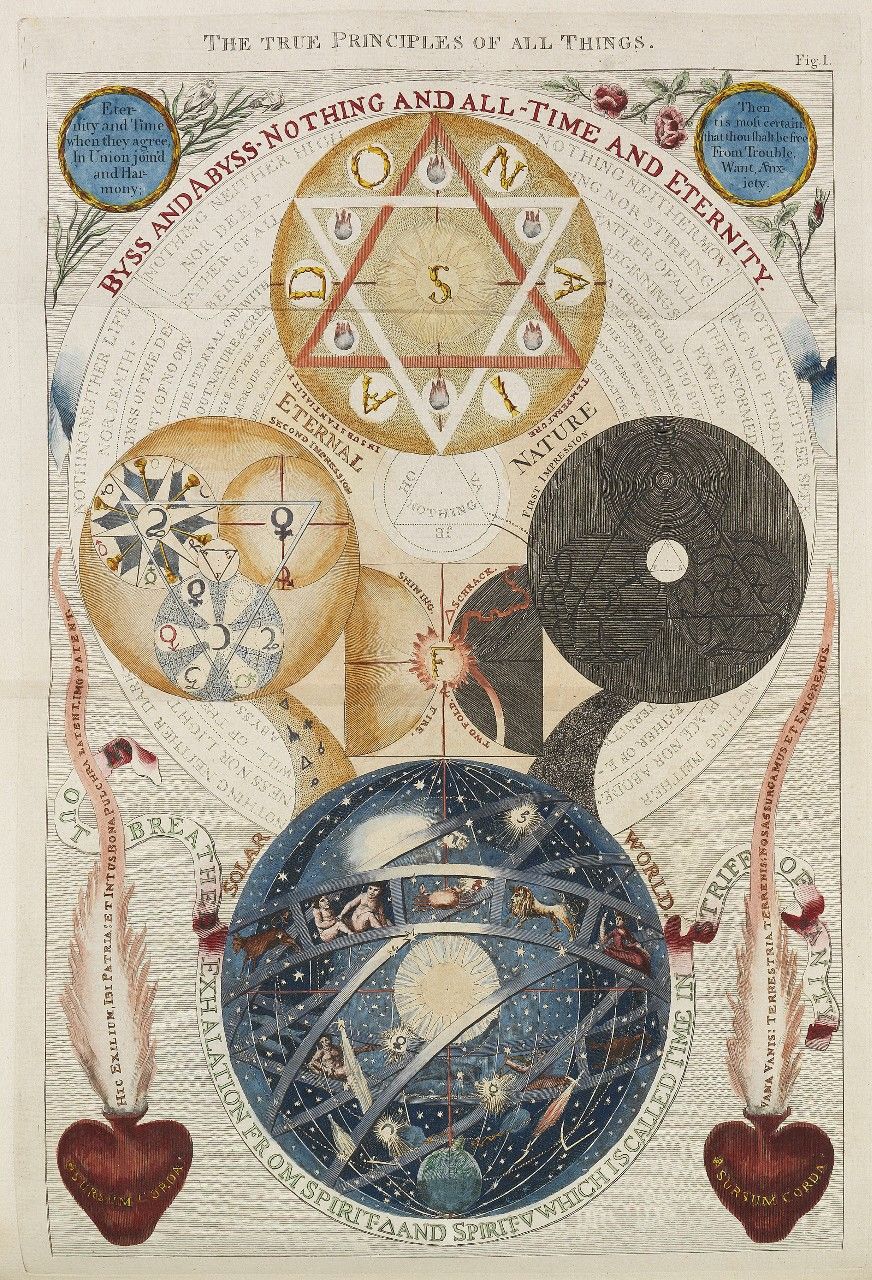
3. Islamic Mysticism: Al-Jamāl and Al-Jalāl, Raḥmah and Ghaḍab
On Gender
“My Mercy encompasses all things.” — Quran, 7:156
“Indeed, My Mercy prevails over My Wrath.” — The Holy Prophet [paraphrasing the Divine]
“His command is only when He intends a thing that He says to it, "Be," and it is.” — Quran, 36:82
Islamic mysticism speaks with intense clarity on this matter. Ibn ‘Arabī notes that the Real (al-Ḥaqq) is known through two fundamental modes:
- Jamāl (Beauty) or Raḥmah (Mercy)
- Jalāl (Majesty) or Ghaḍab (Wrath).
“The Names of Beauty open; the Names of Majesty close. Both are necessary for existence.” — Ibn ‘Arabī, Futūḥāt al-Makkiyya
“Were it not for Gentleness, Severity would destroy creation; were it not for Severity, Gentleness would leave it formless.” — Ibn ‘Arabī, Fuṣūṣ al-Ḥikam
“Existence itself is mercy; non-existence is wrath.” — Al-Ghazālī, Iḥyā’ ‘Ulūm al-Dīn
“Mercy is like a lake, and Wrath is the mountain range confining it.” — Rūmī, Mathnawī, Book 1
“He is the First and the Last, the Manifest and the Hidden.” — Quran, 57:3
Mercy is ontologically prior. The Quranic verse establishes that wujūd (existence) itself is an act of divine generosity: the opening that permits anything at all to be. Wrath is not its negation but its complement: that which constrains, judges, and defines.
“To Allah belong the most beautiful names, so invoke Him by them.” — Quran, 7:180
“He brings forth the living from the dead and brings forth the dead from the living.” — Quran, 30:19
On Clarity
“There is nothing like unto Him.” — Quran, 42:11
“Vision comprehends Him not, but He comprehends all vision.” — Quran, 6:103
“Wherever you turn, there is the Face of God.” — Quran, 2:115
“We will show them Our signs in the horizons and within themselves until it becomes clear to them that it is the truth.” — Quran, 41:53
“The cosmos is the visible Quran; the Quran is the invisible cosmos.” — Ibn ‘Arabī
“He who knows himself knows his Lord.” — The Holy Prophet
“The entire universe is a bridge; cross over it, but build not your dwelling there.” — The Holy Prophet
“Every created thing is a veil over the Real, yet also a sign pointing toward It.” — Al-Ghazālī
“God is known through opposites: His nearness by His distance, His hiddenness by His manifestation.” — Ibn ‘Arabī
On Register
“The Divine is the Light of the heavens and the earth. The Parable of His Light is as if there were a Niche and within it a Lamp: the Lamp enclosed in Glass: the glass as it were a brilliant star: Lit from a blessed Tree, an Olive, neither of the east nor of the west, whose oil is well-nigh luminous, though fire scarce touched it: Light upon Light! the Divine does guide whom He will to His Light: the Divine doth set forth Parables for men: and God does know all things.” — Quran: 24:35
“There are seventy thousand veils of light and darkness between the servant and his Lord.” — the Holy Prophet
“To Him belongs the highest similitude in the heavens and the earth.” — Quran, 30:27
“The cosmos descends through the Divine Presences: the Essence, the Attributes, the Acts, the Imaginal World, and the Material World.” — Ibn ‘Arabī
“Things are arranged in hierarchies of subtlety and density, nearness and distance from the Real.” — Al-Ghazālī
“The heavens are layered: the highest are pure light, the lowest are dense with matter.” — Suhrawardī
“Every creature is a word of God, and the cosmos is His discourse.” — Ibn ‘Arabī
4. Art, Law, Biology, Language
Even beyond theology, the structure is universal. (See Appendix I if you want more theology.)
In Art, the frame makes the image possible: the canvas, the idea is Mercy, Wrath is execution and finesse; without bounds, the work dissolves, it never exists; without the space, and the idea, nothing can appear.
Even Kant’s Critique of Judgment recognizes beauty as the harmony of imagination (free play, opening) and understanding (conceptual determination, closing).
In Jurisprudence, freedom requires limitation: rights as Merciful opening, duties as Wrathful closure. Hart distinguishes primary rules (permissions, possibilities) from secondary rules (constraints, meta-regulations).
In Evolutionary Biology, mutation, genetic drift, and literal birth open the field of phenotypic variation (Mercy), while natural selection, competition, and literal death narrows it into viable form (Wrath).
In linguistics, Saussure’s langue (language as system of possibilities) precedes parole (actual speech acts that actualize specific meanings). Chomsky’s generative grammar posits infinite recursive potential constrained by parametric settings.
You see this in thermodynamics (entropy-expansion vs constraint), in mathematics (axiom sets vs syntactic proof rules), in information theory (channel capacity vs noise).
Exploration is Merciful. It opens the world by refusing premature closure. It permits the Real to disclose further aspects of itself, allowing latent form, hidden order, and unsuspected possibility to emerge into view. It is an act of fidelity to abundance.
Exploitation is Wrathful. It fixes upon what has been disclosed and subjects it to use, extraction, and command. It narrows a field of meaning into a function, reducing the possible to the profitable, the symbolic to the instrumental. Exploration receives; exploitation imposes.
Everywhere, creativity depends on constraint, and constraint draws its meaning from creativity.
Both are necessary. Without exploration, Reality remains unopened to us. Without exploitation, nothing discovered is ever incarnated.
These principles recur not because cultures borrow them from one another, but because culture itself is born from them. Mercy opens the space in which symbols may arise. Wrath gives those symbols definition, boundary, and weight. Together they govern the descent from the Absolute into multiplicity (the arc of emanation), and the ascent of the many back toward intelligibility (the arc of return).
Guénon called this the double movement: involution and evolution, manifestation and reintegration. Coomaraswamy termed it lîlā and yoga: divine play outward, discipline inward.
Every authentic tradition maps the same terrain because the terrain is Reality itself. This is the dance at the heart of Being: not a battle between opposites, but a marriage that surrenders to graded disclosure, from the subtle to the manifest.
This is the nature of Fanaa (Annihilation) and Baqaa (Subsistence).
The Parable of the Green Man
“Moses said to him, ‘May I follow you, provided that you teach me some of the right guidance you have been taught?’Khidr said to Moses, “You certainly cannot be patient enough with me. And how can you be patient with what is beyond your ˹realm of˺ knowledge?” — Quran 18:67-68
“O the depth of the riches and wisdom and knowledge of God! How unsearchable are his judgments and how inscrutable his ways!” — Romans, 11:33
The axis of Register now affords us another way in which to consider the distinction between the esoteric and the exoteric, and indeed what it means for knowledge to be secret or hidden or subtle.
Indeed, the boundary between the esoteric and exoteric is best understood with respect to the apophaticism that we developed in Philosophy is the poor man’s Poetry and From Semantics to Reality.
Let’s pull on this delicate thread. We have:
A1 (Apophatic Incompleteness). No finite concept or symbol can exhaust a principle, because a principle exceeds any determinate form of representation.
A2 (Determination-is-limitation). Any act of conceptual determination: naming, defining, formalising, imposes boundaries on what is, in itself, not bounded by that particular form.
Therefore every articulation of a principle is partial, selective, and distorting in some direction.
A3 (Boundary leakage). If a concept C is used to carve a principle P, then C must exclude some aspects of P. But since P is not identical with (and indeed supercedes) C, the excluded aspects remain relevant to the correct use of C and re-enter as edge-cases, exceptions, and failure-modes.
A4 (Corrective complement). The excluded aspects systematically resemble the “opposite” of C’s emphasis. Hence any correct conception of a principle must carry a perceptible remainder of its corrective complement.
To illustrate this idea, let’s consider the Yin-Yang Taijitu:
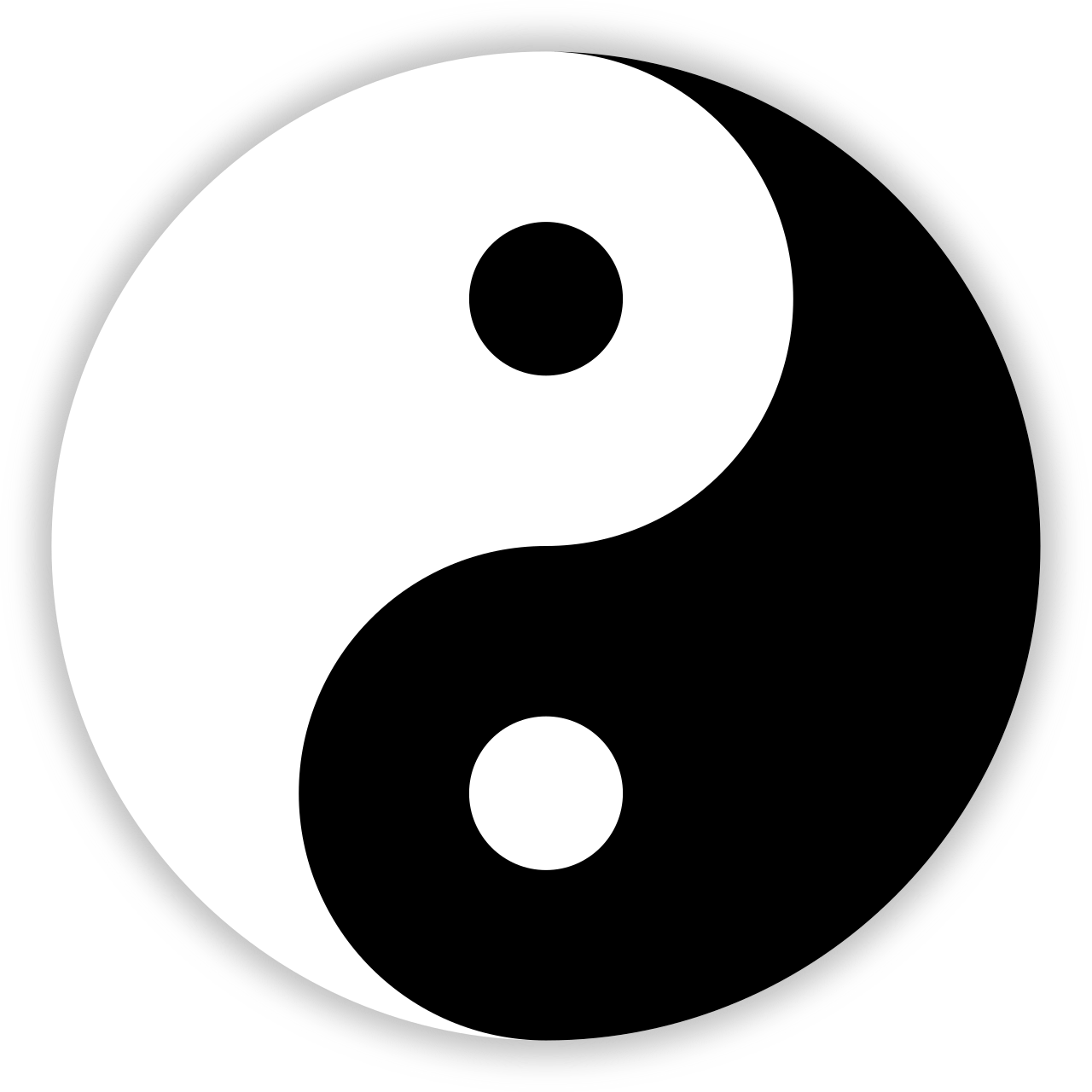
This elegantly articulates the fact that in light, there is an element of darkness, in darkness, there is an element of light, and that it is only by virtue of their totality and harmony that wholeness or a gestalt emerges.
This is not “Oriental Mystical woo” but an inevitable outcrop of the limits of linguistic and conceptual representation.
Definition: The Esoteric is knowledge that lies beyond the limits of conceptual representation. That doesn’t mean that it’s not real (in fact, it is more real as a result of its higher register), simply that it is inarticulable.4 The Esoteric is the apprehension of Reality at a higher register.
Definition: The Exoteric is knowledge that lies within the limits of conceptual representation. It is what must apply in order to shape or manifest the principles that the esoteric purveys. The Exoteric is the apprehension of Reality at a lower register.
Language and conceptual representation is what demarcates the boundary between them.
Note: Importantly, we see that even along the axis of Register, the axis of Gender reappears. The Esoteric is more Mercy since necessary principles, abstractions and intuitions are both more philosophically and existentially fecund and yet less determinate than the Exoteric which is more Wrath, and which is comprised predominantly of conceptual philosophy, law, traditional norms, and practice.
Let us now consider an aspect of Reality: a tradition, a civilisation, a family, a life, or even a scene in Nature.
Where there is too much Exotericism, Principle is stifled and obfuscated, the Light of the Real is extinguished and symbols are absolutised. Death prevails. This is what it means for a tradition to be a husk. This is what it means for Life to become life, akin to death.
“People of the Book, do not go to excess in your religion” — Quran, 4:171
"Religion is very easy and whoever overburdens himself in his religion will not be able to continue in that way.” — the Holy Prophet
Where there is too much Esotericism, Principle is indeterminate, the Light of the Real never finds the requisite form required for manifestation, and symbols are suffocated instead. Chaos prevails. This is what it means for a tradition never to develop at all. This is what it means for Life never to form at all.
"Before enlightenment, chop wood, carry water. After enlightenment, chop wood, carry water." — Layman P’ang, Zen Koan
“A Tree will be judged by its fruits.” — The Bible, Matthew 7:15
"He who practices Mysticism (Tasawwuf) without learning the Law (Fiqh) corrupts his faith, while he who learns Sacred Law without practicing Sufism corrupts himself. Only he who combines the two has the Truth." — Imam Malik
The imbalance of the esoteric or exoteric in a symbol or aspect of Reality invokes its lack of Clarity.
A Matter of Why
“Absence of evidence is not evidence of absence.” — William Wright
All this is very abstract. Let us re-frame this talk of Principle and the manner in which the esoteric flows into the exoteric in the clearest way possible.
Here’s an example: to apprehend or collide with a symbol’s (esoteric) principle is to apprehend its purpose. In the deepest sense, when a man interrogates, divines, and comes to grips with his purpose, he apprehends Reality esoterically.
I don’t mean the purpose of his body or his mind, but of his soul, his very existence. It is to interrogate and intuit the answer to the question: “Why am I?”
It is no surprise that it is hard to articulate an answer to this. Any attempt to articulate this inevitably falls short for it attempts to articulate the principle underpinning his existence, a principle that is necessarily unsayable.
Nobody can tell you what the purpose of their existence is. Importantly, nor should we expect them to.
And yet, this principle, the answer to the question of why is what determines and guides virtually everything that ultimately follows, from his dispositions and moods, his preoccupations and habits, his philosophical beliefs and leisurely pastimes, his social relationships and his quietest moments.
All this is the exoteric that can only ultimately follow from the esoteric within him, even if he does not know it does. The question of why exerts a causal and inescapable influence over all that he was, is, and will become.
Our cardinal sin is to confuse the absence of the ability to speak of purpose, with the absence of purpose itself.
This is what it means to say that Intention (niyyah) is everything. The intent of an act is its why, and is the principle that underlies it. There is of course a why for that intent, and a why for that why and so on, but it is only in the presence of a suitable why that the action becomes meaningful.
“Actions will be judged by their intentions.” — the Holy Prophet
"The intention is the soul of the deed... an act without a sincere intention is like a person trying to offer a gift to a king in a box that is actually empty." — Al-Ghazali
The exoteric must be animated by the esoteric for it to have any hope of clarity and therefore connection with the Real.
Virtue and Vice
“All creatures are ordered to God as to their end, and some more perfectly than others.” — Thomas Aquinas, Summa Theologica, I, Q.65
“The more a thing is, the more it is like God.” — Meister Eckhart, Sermon 6
We are now finally in a place where we can talk about Virtue and Vice.
In Not Objectivity but Annihilation, we define the appropriate epistemic standards by which to evaluate Reality: i.e. that it is not the view from nowhere but the view from Everywhere. Higher knowing inherently reaches into you, it is transformative. This is the difference between knowledge and wisdom.
However, our task was to determine what constitutes the appropriate kind of higher knowing? How do we know whether or not we’ve been transformed “correctly”?
We alluded to this in three places already:
- In Only when a Man dies, does he Awake, we note that the interpretation of the symbols that constitute Reality must beget either:
- an act of serenity: to contemplate symbols in a way that clarify their purpose
- an act of courage: to manipulate symbols in a way that clarify their purpose
- In From Semantics to Reality, we note that interpretations (or models) of Reality ought to be world-anchored. That is, interpretations ought to heighten a symbol’s semiotic and syntactic fidelity. This is the non-arbitrary constraint that the extant world imposes. When an interpretation is wrong, Reality itself resists it: prediction fails, action misfires, coordination breaks, and the interpretation can only be saved by endless ad hoc patches: the opposite of a stable, eternal principle which survives variation and multiplicity.
- In Not Objectivity but Annihilation, we note that higher knowing is constrained:
- ontologically: symbols can disclose only what is capable of accounting for their being, not whatever the interpreter happens to impose
- existentially: interpretations that are false fail to transform the interpreter in ways that deepen intelligibility, coherence, and orientation. Interpretation must result in positive activity (either appreciative or determinative).
- aesthetically: “The Truth is hard to pin down, Justice is complicated to enact, but Beauty is immediately graspable.”
Let’s tie all of this together now.
Definition: Virtue is the clarification of a symbol’s relationship with its underlying principle. It is the alignment of a symbol to its purpose. Think of it like “stacking” a symbol correctly underneath the principle that gives rise to it so that the principle is most clearly apprehended without the symbol being confused for it. This is done with an act of either Mercy (which opens, changes, potentiates, softens, and affords it) or with an act of Wrath (which defines, judges, tightens, and fixes it) at the minimal sufficient register.
The minimal sufficient register is the lowest register needed in order to stably, persistently, and empirically heighten the alignment in question without introducing new misalignments. This is simply world-anchoring applied to ethics.
The world will resist virtue if it takes place at an inappropriate register.
For instance, if virtue acts at too low a register, then it may well be unstable and patchy, because we’re addressing only the instance of the misalignment, not its source. If virtue acts at too high a register, it may not be easy to world-anchor or empirically verify. Taking a bottle away from a drunkard one time will not fix him. Similarly, entreating him to read a treatise on Stoic Temperance may land (and change his life), but also may not result in enough activity for us to evaluate if it has worked.
Definition: Vice is simply the opposite. It is the obfuscation of a symbol’s relationship with its underlying principle. It is the disalignment of a symbol to its purpose. Think of it like the disconnection of a symbol from the principle that gives it meaning and purpose. This is again done with an act of either Mercy (which confuses, unbinds, distorts, or unmoors it) or with an act of Wrath (which suffocates, suppresses, restricts or instrumentalises it) at an inappropriate register.
Virtue is thus a symbol’s clarification to its higher register principles with a gendered act at the register where misalignment occurs.
Since the Real, the Divine, the Absolute underpins all symbols, virtue is what causes all symbols in all their forms myriad and sundry to be oriented to or to point to the Divine.
Example: The Rectification of the Names
The Confucian Rectification of the Names most often refers to the desire to well-order society. More specifically: “things in actual fact should be made to accord with the implications attached to them by names, the prerequisites for correct living and even efficient government being that all classes of society should accord to what they ought to be”.
Ministers are to be ministers, bureaucrats are to be bureaucrats, fathers are to be fathers, women are to be women, brothers are to be brothers, and janitors are to be janitors.
This well-ordering is a specific instance of the more general question of aligning symbols to their teleology or purpose.
As such, the Rectification of the Names in this context refers to a virtuous act of wrath taking place at the level of political organisation to clarify our purposes with respect to the rest of society.5
An Optical Metaphor
Think of a light source emitting light passing through a series of lenses. If any one of the lenses is misaligned, then all subsequent lenses lie in darkness. In order to illuminate the rest of the lenses, we must find the appropriately misaligned lens and rectify or align it.
Plate IX — The Stacking of Lenses — enacts this metaphor.
Appropriate here once again means the minimal sufficient register. When two misalignments take place, then we must begin by finding the misalignment of highest register, since its correction exerts the greatest causal influence downstream.
Note: All psychotherapy, for instance, is the search for the minimal sufficient register driving the pathology.
Definition: Virtuous transformation in the context of higher knowing, then, is transformation in such fashion that one is more clearly able to discern the principle underlying each symbol, to align it in such fashion that the lenses stack up and the Divine is manifest.
The Sage is one who looks at the World and is transformed such that the lenses are perfectly stacked, such that the principles underneath every extant symbol point inexorably, inevitably, inescapably, and inextricably to the Divine itself.
You look at the world and see the world.The Sage looks at the world and sees nothing but God.
Appendix I: More Echoes
Here are some more examples from Tradition where you will see the same axes of disclosure at work:
1. Christian Theology: Grace and Law, Agape and Judgment
On Gender
“The law was given through Moses; grace and truth came through Jesus Christ.” — Gospel of John, 1:17
“So God created man in his own image, in the image of God he created him; male and female he created them.” — Genesis, 1:27
Augustine distinguishes misericordia (mercy) and iustitia (justice) as twin attributes of God, both necessary for Creation’s coherence.
“In the beginning was the Word, and the Word was with God, and the Word was God... And the Word became flesh and dwelt among us.” — Gospel of John, 1:1, 1:14
“Mercy triumphs over judgment.” — James, 2:13
“Mercy is the root of all God’s works in the world.” — Thomas Aquinas, Summa Theologica, I, Q.21, A.4
“Justice without mercy is cruelty; mercy without justice is dissolution.” — Augustine, City of God, Book XIX
On Clarity
“For now we see in a mirror dimly, but then face to face. Now I know in part; then I shall know fully, even as I have been fully known.” — 1 Corinthians, 13:12
“The heavens declare the glory of God, and the sky above proclaims his handiwork.” — Psalm, 19:1
“For his invisible attributes, namely, his eternal power and divine nature, have been clearly perceived, ever since the creation of the world, in the things that have been made.” — Romans, 1:20
“All things were made through him, and without him was not any thing made that was made.” — Gospel of John, 1:3
“The entire sensible world is like a book written by the finger of God.” — Hugh of St. Victor, Didascalicon
“Creatures are shadows and echoes of the Creator.” — Bonaventure, Itinerarium Mentis in Deum
“Analogia entis: all being is analogous to divine Being, participating in it without identity.” — Thomas Aquinas, Summa Theologica, I, Q.13
On Register
“Being is participated in degrees: God possesses it essentially, creatures possess it by participation.” — Thomas Aquinas, De Ente et Essentia
“The Incarnation is the supreme kenosis: God empties Himself into finitude.” — Maximus the Confessor, Ambigua
The Incarnation itself: Verbum caro factum est is the ultimate closing movement: the infinite Logos particularized in flesh, assuming maximal contingency (the Divine’s register lowered to the point of corporeal death!) to redeem it from within.
“There are heavenly bodies and earthly bodies, but the glory of the heavenly is of one kind, and the glory of the earthly is of another.” — 1 Corinthians, 15:40
“But each in his own order: Christ the firstfruits, then at his coming those who belong to Christ.” — 1 Corinthians, 15:23
“The ladder of creation ascends from stones to plants, from plants to animals, from animals to man, from man to angels, from angels to God.” — Pseudo-Dionysius
2. Greek Philosophy: Apeiron and Logos, Chaos and Kosmos
On Gender
“From the unlimited (apeiron) are generated the heavens and the worlds within them.” — Anaximander, Fragment 1
“The hidden harmony is better than the apparent.” — Heraclitus, Fragment 54
“God is day and night, winter and summer, war and peace, satiety and hunger.” — Heraclitus, Fragment 67
“The Demiurge looks to the eternal Forms and imposes them upon the receptacle (khōra), which receives all forms but has none of its own.” — Plato, Timaeus, 50c-51a
“Matter is potentiality; form is actuality.” — Aristotle, Metaphysics, Book IX
“The active intellect is separated, impassible, unmixed, being in its essence actuality.” — Aristotle, De Anima, 430a
On Clarity
“The Forms are separate from the things that participate in them.” — Plato, Phaedo, 100d
“Particular things are called after the Forms because they participate in them.” — Plato, Parmenides, 132d
“The poets lie too much.” — Plato, Republic, Book X
“Art imitates nature.” — Aristotle, Physics, 194a
“There is nothing in the intellect that was not first in the senses.” — Aristotle, De Anima (paraphrased tradition)
“The soul is in a sense all things.” — Aristotle, De Anima, 431b
“We see all things as shadows on the cave wall; the real is outside, in the sunlight.” — Plato, Republic, Book VII
On Register
“The One is beyond being.” — Plato, Republic, 509b
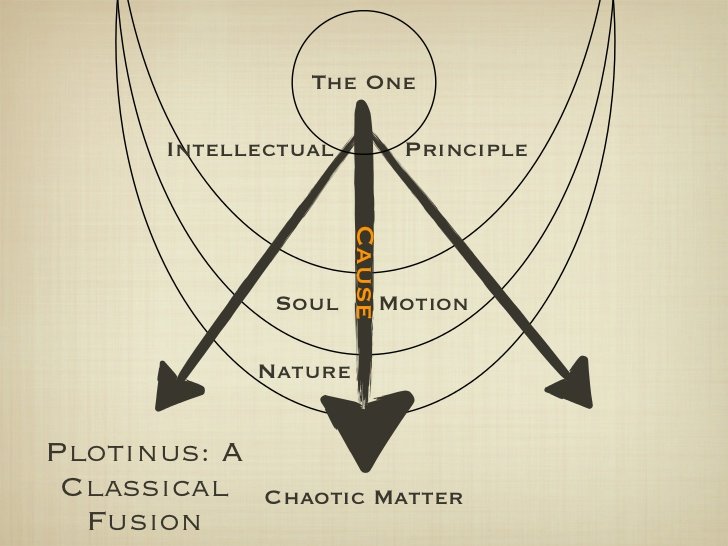
“From the One proceeds the Intellect (Nous); from Intellect proceeds Soul (Psyche); from Soul proceeds Nature; from Nature, Matter.” — Plotinus, Enneads, V.1
The scala naturae (ladder of being) orders all substances by degree of form: Prime Mover as pure actuality (highest register), prime matter as pure potency (lowest register), all intermediate beings composed in proportion.
“The Good is that for the sake of which all things are.” — Aristotle, Nicomachean Ethics, 1094a
“The unmoved mover moves all things by being loved.” — Aristotle, Metaphysics, 1072b
“Things are arranged in a scale from the lowest (prime matter) to the highest (pure form, the divine).” — Aristotle, Metaphysics, Book XII
“The higher always acts upon the lower, but the lower cannot act upon the higher.” — Plotinus, Enneads, II.9
Plotinus systematizes this as emanation from the One through Intellect (Nous) and Soul (Psyche) to Nature and Matter: each procession a descent in simplicity, an increase in multiplicity and distance from the Source.
“As one descends from the One, unity decreases and multiplicity increases.” — Plotinus, Enneads, V.3
3. Jewish Kabbalism: Chesed and Gevurah, Tzimtzum and Shefa
On Gender
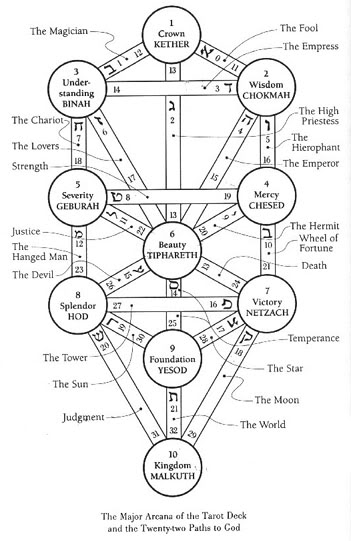
“Loving-kindness (chesed) is the right hand of God; severity (gevurah) is His left hand.” — Zohar, I:15a
“The Lord is gracious and merciful, slow to anger and abounding in steadfast love.” — Psalm, 145:8
The Zohar teaches that Creation requires both shefa (overflow, emanation) and tzimtzum (withdrawal, contraction).
“Tzimtzum: God contracted His infinite light to make space for creation.” — Isaac Luria, Etz Chaim
“The breaking of the vessels (shevirat ha-kelim) occurred because the lower sefirot could not contain the divine influx.” — Isaac Luria
“Chesed without gevurah is chaos; gevurah without chesed is destruction.” — Zohar, III:142a
“Wisdom (chokhmah) is the seminal point; understanding (binah) is the womb that receives and expands it.” — Sefer Yetzirah, 1:5
On Clarity
“The secret things belong to the Lord our God, but the things that are revealed belong to us and to our children forever.” — Deuteronomy, 29:29
“All that exists below has its counterpart above.” — Zohar, I:156b
“As above, so below; as within, so without.” — Hermetic tradition (Jewish mystical influence)
On Register
“From Keter (Crown) down to Malkhut (Kingdom), the light descends through gradations.” — Zohar, I:20a
The Kabbalistic Sefirot (divine emanations) map the descent from Keter (Crown, pure unity) through paired polarities: Chokmah (Wisdom, masculine, active) and Binah (Understanding, feminine, receptive), Chesed and Gevurah, Netzach (Eternity, expansion) and Hod (Splendor, limitation) culminating in Malkhut (Kingdom, maximal particularity, the material world).
“Each lower world is sustained by the overflow (shefa) from the world above it.” — Etz Chaim, Isaac Luria
“The higher the sefirah, the more unified and simple; the lower, the more multiple and composite.” — Moses Cordovero, Pardes Rimonim
“Malkhut is the receptacle for all the sefirot above; it receives but does not give of itself.” — Zohar, I:249b
Appendix II: A Note on Caste
“There are four castes: the Brahmana, Kshatriya, Vaisya, and Sudra, created from my mouth, arms, thighs, and feet.” — Rig Veda, 10.90 (Puruṣa Sūkta)
“According to the three modes of material nature and the work ascribed to them, the four divisions of human society were created by Me.” — Bhagavad Gītā, 4.13
The social articulation of varṇa (caste) is meant to mirror this ontological idea:
- the Brahmin (priest-sage) embodies wisdom, closest to the divine
- the Kṣatriya (warrior-king) wields Wrath as law and protection
- the Vaiśya (merchant) generates the plurality of material forms and mechanisms
- the Śūdra (servant) occupies maximal particularity in concrete activity
This is not merely social ordering but symbolic expression of register: abstraction as proximity to necessity, concreteness as the hallmark of contingency.
Reserve your judgment: we will have much to say on this later.
Notes
- Both of these take place within the Neoplatonic First Intellect. The Egg really does come before the Chicken. ↩
- It is definitely true that some females exhibit more essential Wrath and some males exhibit more essential Mercy. To that end, these are better discussed as principles that male and female souls participate in to varying extents. ↩
- Deutsch’s assertion in the Beginning of Infinity, then, that good explanations are hard to vary is not simply a heuristic, but a claim about a theory’s register and goodness. ↩
- I despise the notion of “experiential knowledge” to refer to the mystical. It is simply a sloppy catch-all designation for the apprehension of the esoteric that relies on the intransmissibility of private experience. We can convey concepts, but cannot convey experience (for now). Since private experience is the most salient idea at hand when discussing that which is beyond expression, it is tempting to invoke when discussing the esoteric. We must resist this temptation and invoke experience precisely when relevant. ↩
- Of course, this should give you the impression that much virtue and vice is downstream and ultimately comes down to cognitive or intuitive error or misalignment: we will re-visit this. You are not wrong. ↩